Brooklyn was a 238-acre neighborhood in the city of Charlotte’s Second Ward.It was home to schools, churches, civic organizations, Black-owned businesses, and over a thousand families. Brooklyn was the cultural and economic epicenter of Black Charlotte. Brooklyn was a city within a city for those who called it home.
Home to schools, churches, civic organizations, Black-owned businesses, and over a thousand families, Brooklyn was the cultural and economic epicenter of Black Charlotte. From the late 1800s through the 1960s, this city within a city provided opportunity and sanctuary for African Americans in a segregated South.
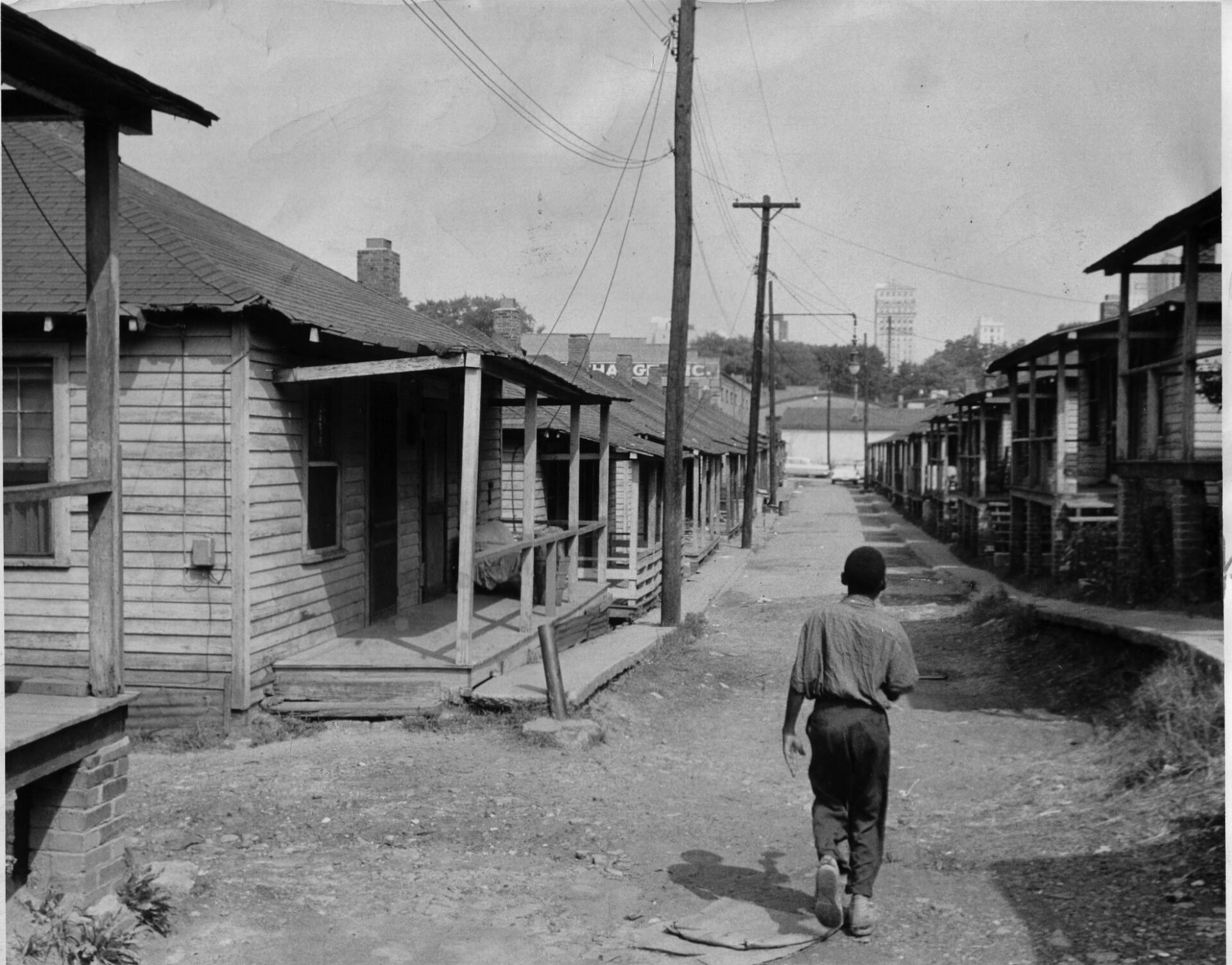
A young boy walking down a Brooklyn road.
Courtesy of the Charlotte Observer.
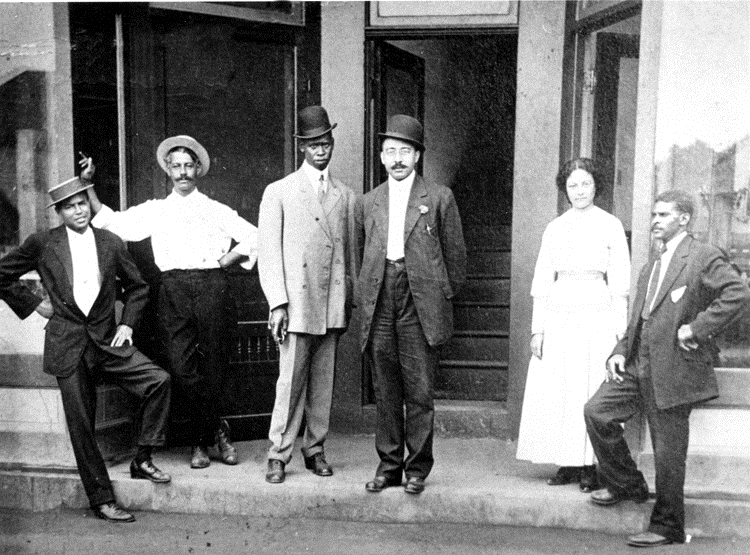
J. T. Sanders and other businesspeople standing in front of Brooklyn Drug & Sundries around 1910.
Courtesy of the Robinson-Spangler Carolina Room – Charlotte Mecklenburg Library.
Like any neighborhood or community, Brooklyn had a mix of affluence and poverty, elegant homes and dilapidated apartments. White commuters saw the poverty-stricken parts of Brooklyn when they were traveling from the more affluent neighborhood of Myers Park to Uptown. Postwar federal programs gave cities the funding to reimagine their city centers. Reimagination came at the cost of Black social capital and generational wealth. Urban redevelopment allowed white business speculators to capitalize on prime real estate, and Brooklyn was no exception to the rule.
Between 1961 and 1970, 216 businesses, 13 churches, 2 schools, and 1,480 homes were destroyed, displacing over 7,000 residents and 1,007 families. Many former residents remember being promised they would be able to return to Brooklyn, but those promises went unkept. This process displaced and dispersed families across Charlotte looking for affordable housing. Many businesses never reopened, churches splintered into different congregation, and court-ordered busing sent students across town.
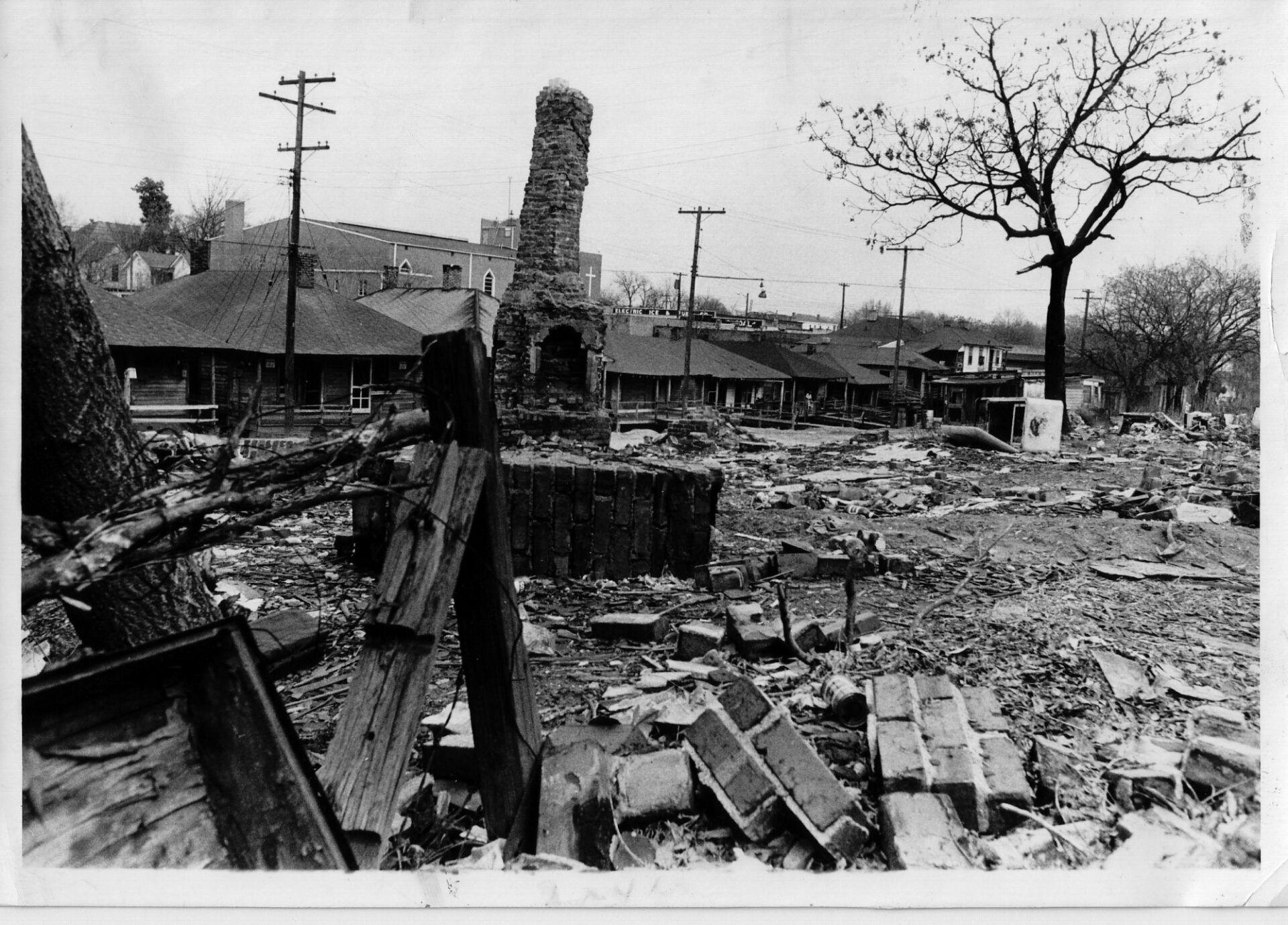
In 1963, the destruction of Brooklyn was well underway.
Courtesy of The Charlotte Observer.