Construction erased busy streets and widened others. As urban renewal continued, Brooklyn became unrecognizable. Sterile government buildings, hotels, and new office buildings replaced the heart of Black Charlotte. Displaced by the project, more than 7,000 people found themselves scattered across the city trying to reclaim some semblance of the life and community they had.
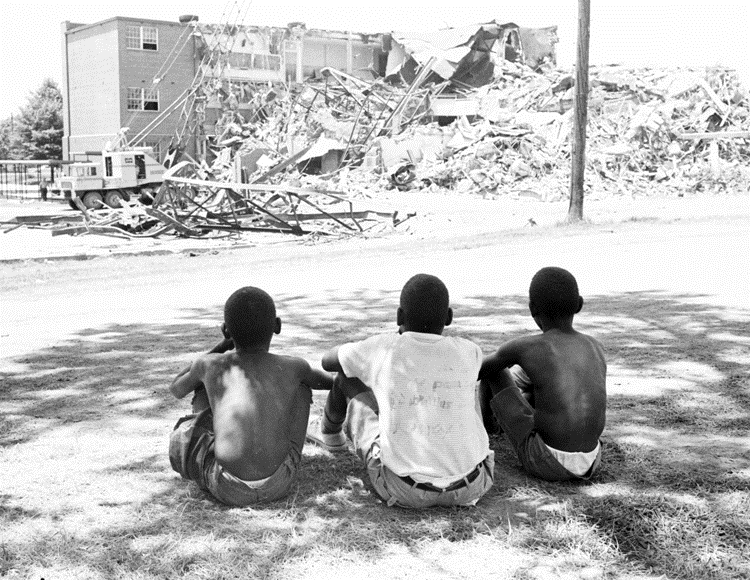
Three boys watch the demolition of Second Ward High School in 1970.
Courtesy of the Robinson-Spangler Carolina Room – Charlotte Mecklenburg Library.
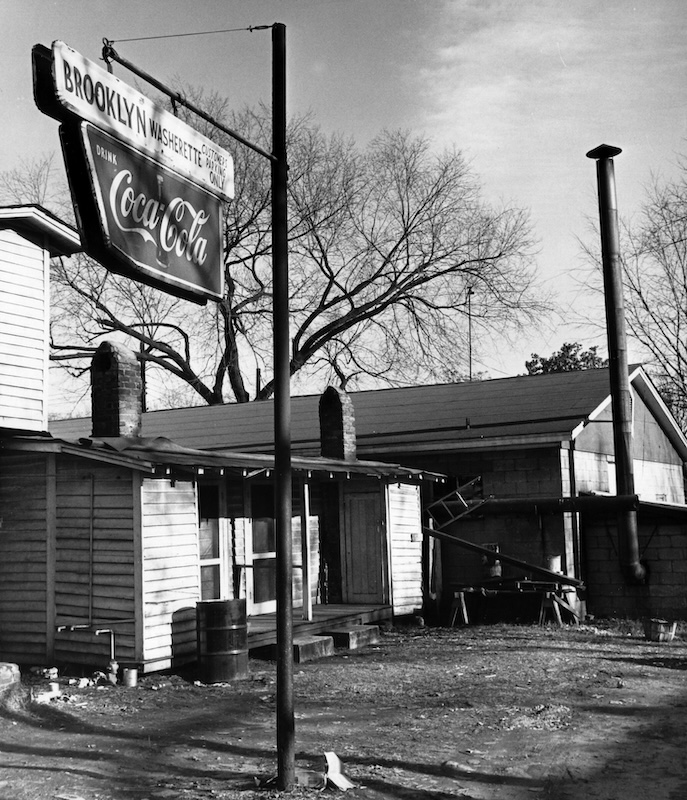
Brooklyn washerette, 1960. One of many Brooklyn businesses demolished during urban renewal. Courtesy of the Charlotte Observer.
Most people who were displaced relocated to predominantly Black neighborhoods in west and northwest Charlotte some on their own and others with assistance from the Redevelopment Commission. Former residents who found better housingexperienced increased rents, while others landed in living conditions similar to Brooklyn. Many moved into public housing communities, like Piedmont Courts and Earle Village. Business owners faced financial difficulties relocating, and many never reopened. In 1968, the last people left Brooklynfor places like Double Oaks, University Park, Piedmont Courts, and Earle Village.
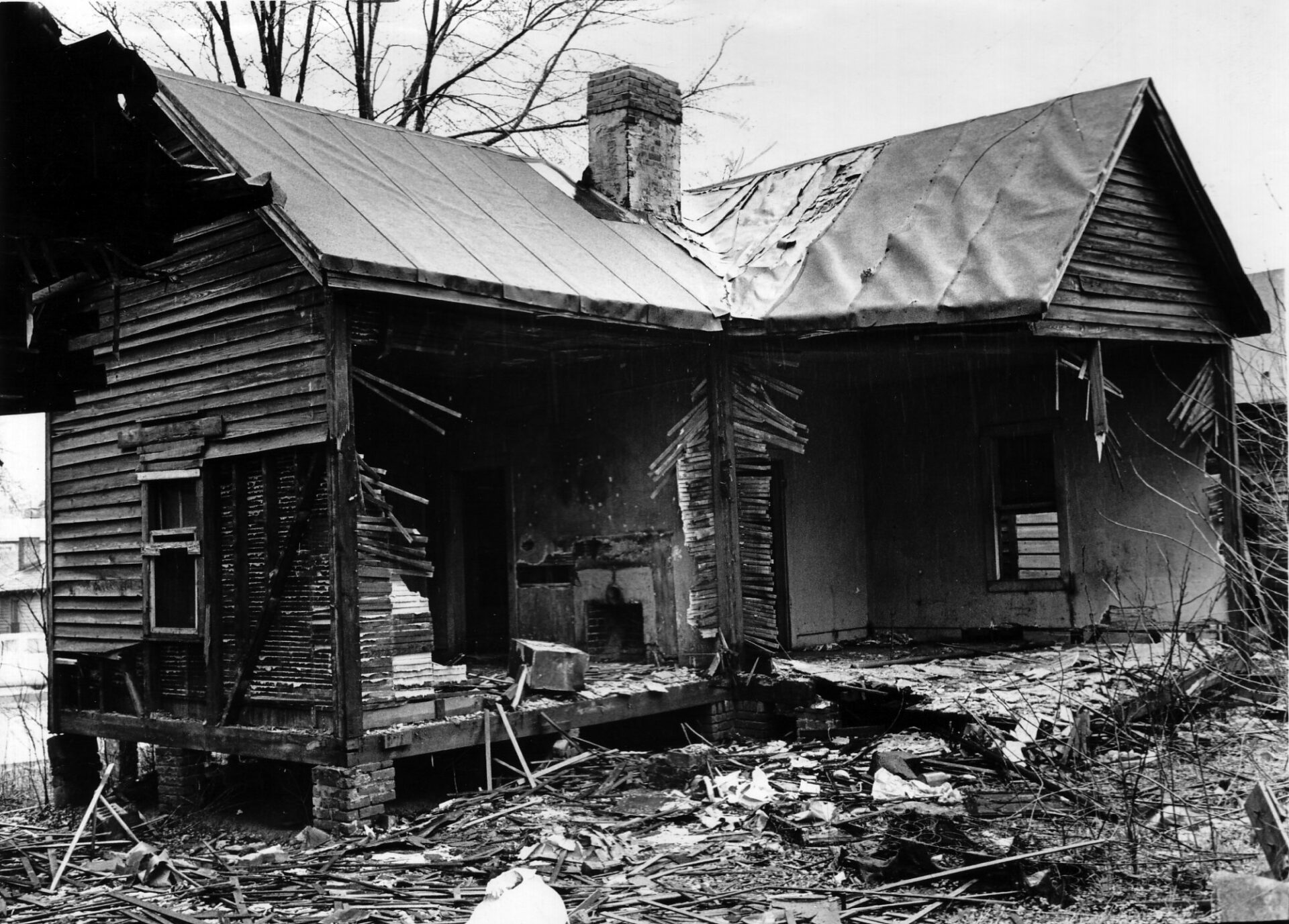
By 1965, demolition of Brooklyn was well under way.
Courtesy of The Charlotte Observer.
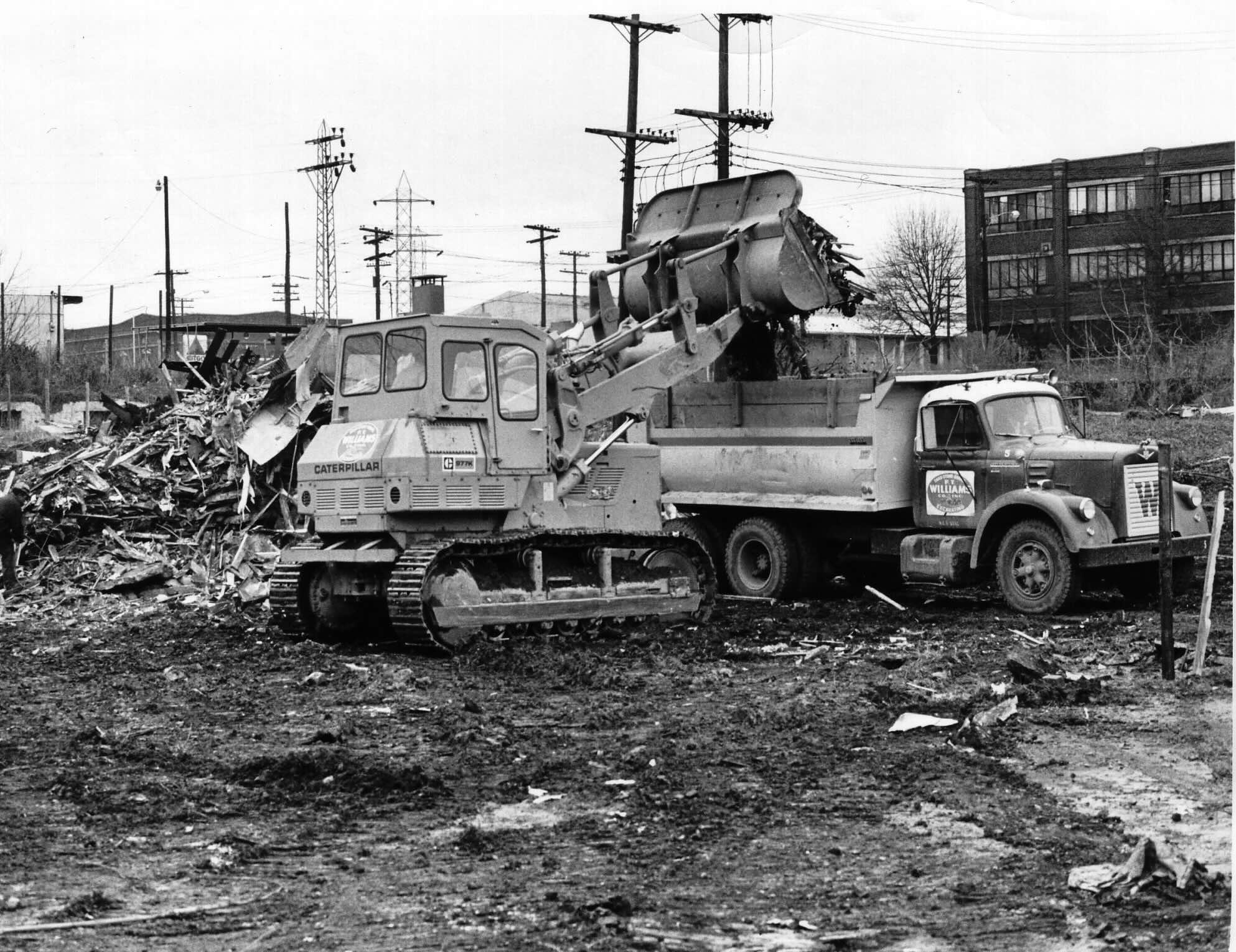
A dump truck being loaded with the wreckage of Brooklyn buildings in 1969.
Courtesy of The Charlotte Observer.
No matter where former residents found themselves, most people felt they had lost much more than they gained. People lost their homes, neighbors, and their sense of belonging. A tight-knit community had been dissolved into other predominantly Black parts of Charlotte, which exacerbated housing segregation and destroyed a social capital network decades in the making.