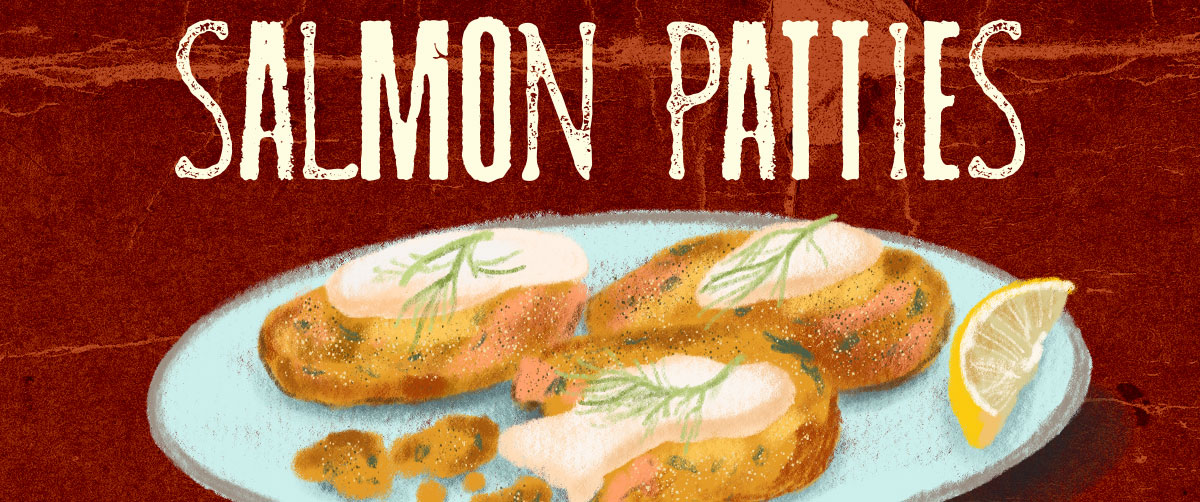
Salmon patties, or cakes, are a delicacy and comfort food for many southerners. They are made by mixing canned pink salmon, an egg for binding, and breadcrumbs or shredded bread, then pan-fried, deep-fried, grilled, or baked. Southerners and people around the country enjoy salmon cakes for breakfast, lunch, and dinner.
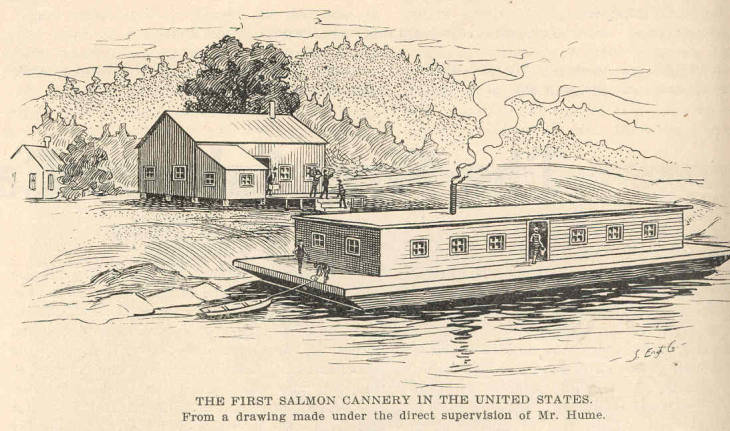
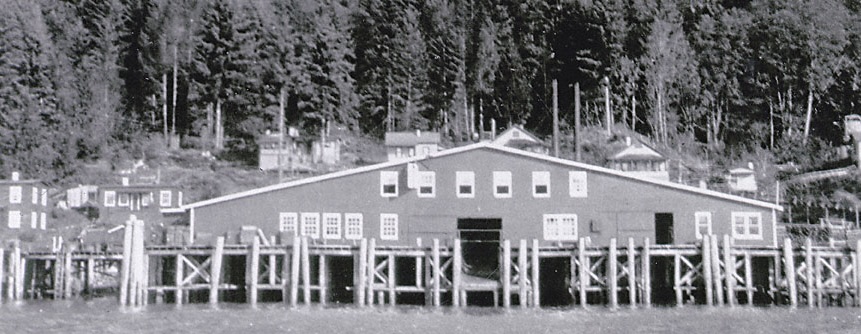
Salmon patties are typically made with canned salmon; as such, the history of the salmon patty is tied to the history of salmon canning. The first industrial-scale salmon cannery opened on the Sacramento River in 1864. By 1883, salmon canning was a major industry on the Columbia River in the Pacific Northwest. By the 1900s, Alaska had become a significant player in the canned salmon market. It became possible to bring large amounts of salmon inland at a low cost, making a new protein source available to new, much larger populations.
Drawing of the first salmon cannery in the United States, opened in 1864 by the Hapgood-Hume Company. Courtesy of the National Oceanic and Atmospheric Administration.
An undated image of Eagle Cliff Cannery, the first cannery on the Columbia River. This cannery was also opened by the Hapgood-Hume Company. Courtesy of Oregon Historical Society.
Salmon patties are a product of the Great Depression, a worldwide economic downturn from 1929 to 1939. As the effects of the Depression spread across the United States, millions lost their jobs. Many families could not afford food, rent, mortgage, or other necessities. Breadlines and soup kitchens became common in many cities and towns due to widespread unemployment and hunger. As Americans struggled to feed themselves, they began turning to new food items and recipes to sustain themselves. One of those recipes was salmon patties.
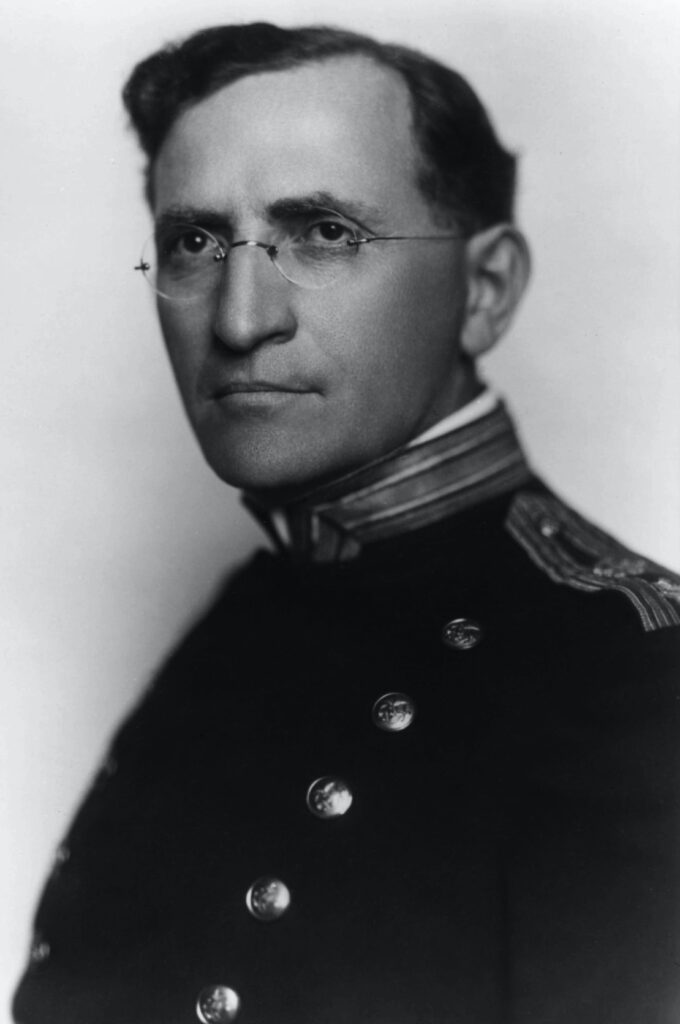
The introduction of salmon patties also helped solve other problems that were plaguing the nation. In 1926, Dr. Joseph Goldberger discovered that pellagra is a dietary disease that occurs when a person does not obtain enough niacin (one of the B-complex vitamins) or tryptophan (an amino acid) in their diet. People with diets that were deficient in meat, milk, and eggs but were heavy in cornmeal were most likely to develop pellagra. Corn was an essential part of a southerner’s diet back then, meaning pellagra was most common among impoverished and rural southerners. The salmon patty provided a nutritious solution for pellagra.
Dr. Joseph Goldberger, who discovered pellagra. Courtesy of the Center for Disease Control and Prevention.
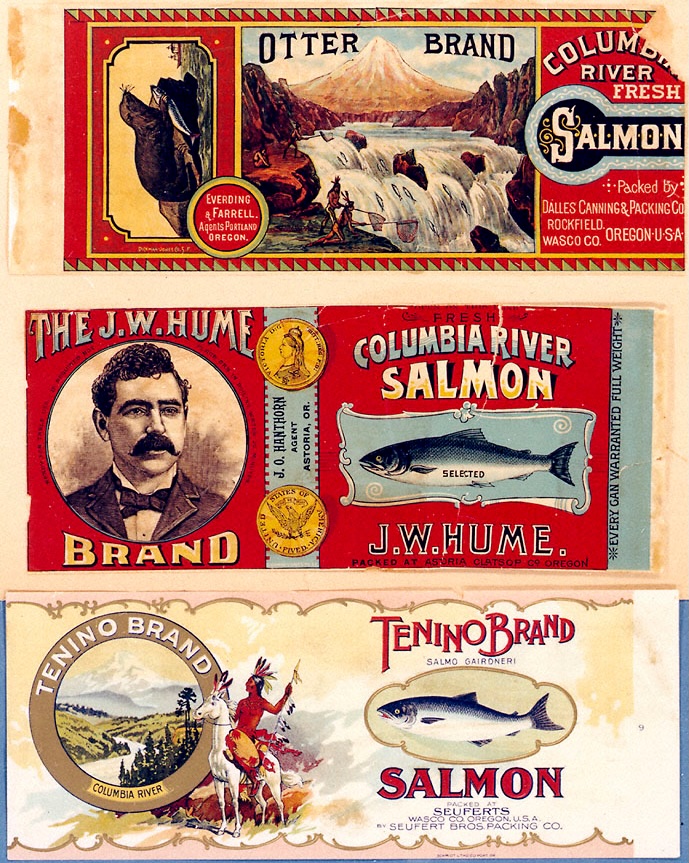
Undated labels from three different brands of canned salmon from the Columbia River. Courtesy of Oregon Historical Society.
The Great Depression hit the United States hard, especially the U.S. South, as more and more people struggled to make ends meet. The United States government took action to prevent widespread famine, subsidizing the canning industry through the New Deal in the 1930s. Canned salmon at the time cost less than a nickel at the local grocery store.
The U.S. Departments of Health and Agriculture worked to create recipes that were as nutritionally complete as possible. They looked for ways to make protein-rich foods non-perishable for the masses. Salmon patties were one of those recipes; they were inexpensive, easy to prepare, and nutritious. They became a mainstay in southern cuisine.
Advancements in canning technology during the Great Depression made salmon an economical option for first-generation Jewish families, seeking affordable and kosher meals. Salmon patties are kosher and pareve (meaning they are made without milk, meat, or their derivatives), and Jewish families around the country have enjoyed them. Some Jewish recipes for salmon patties call for a variation in breadcrumbs, so matzah (a thin, crisp unleavened bread) crumbs are used as the binder.
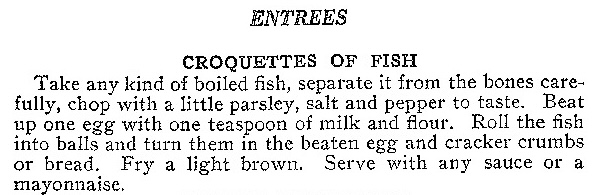
A salmon croquette recipe from a 1919 Jewish cookbook. Courtesy of Michigan State University Libraries.
There are variations in fried salmon dishes. For example, salmon patties and croquettes are not the same, although they are used interchangeably. Both use the same or similar ingredients, but the difference lies in the size of the fish. In general, croquettes are made from smaller pieces of salmon, which gives them a lighter texture.
Salmon patties, which are made with larger pieces of salmon, are denser. Salmon croquettes were a favorite of The Sound and the Fury author William Faulkner, according to Bill Griffith, the curator at Rowan Oak, Faulkner’s home in Oxford, Mississippi. Whether a person prefers patties or croquettes, both can be found at restaurants and eateries around the South. Salmon patties are still being made in homes today.
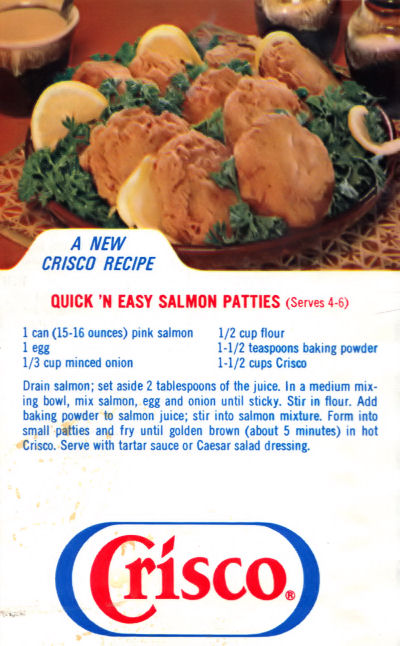
An undated promotional recipe for salmon patties from Crisco. Courtesy of RecipeCurio.com.