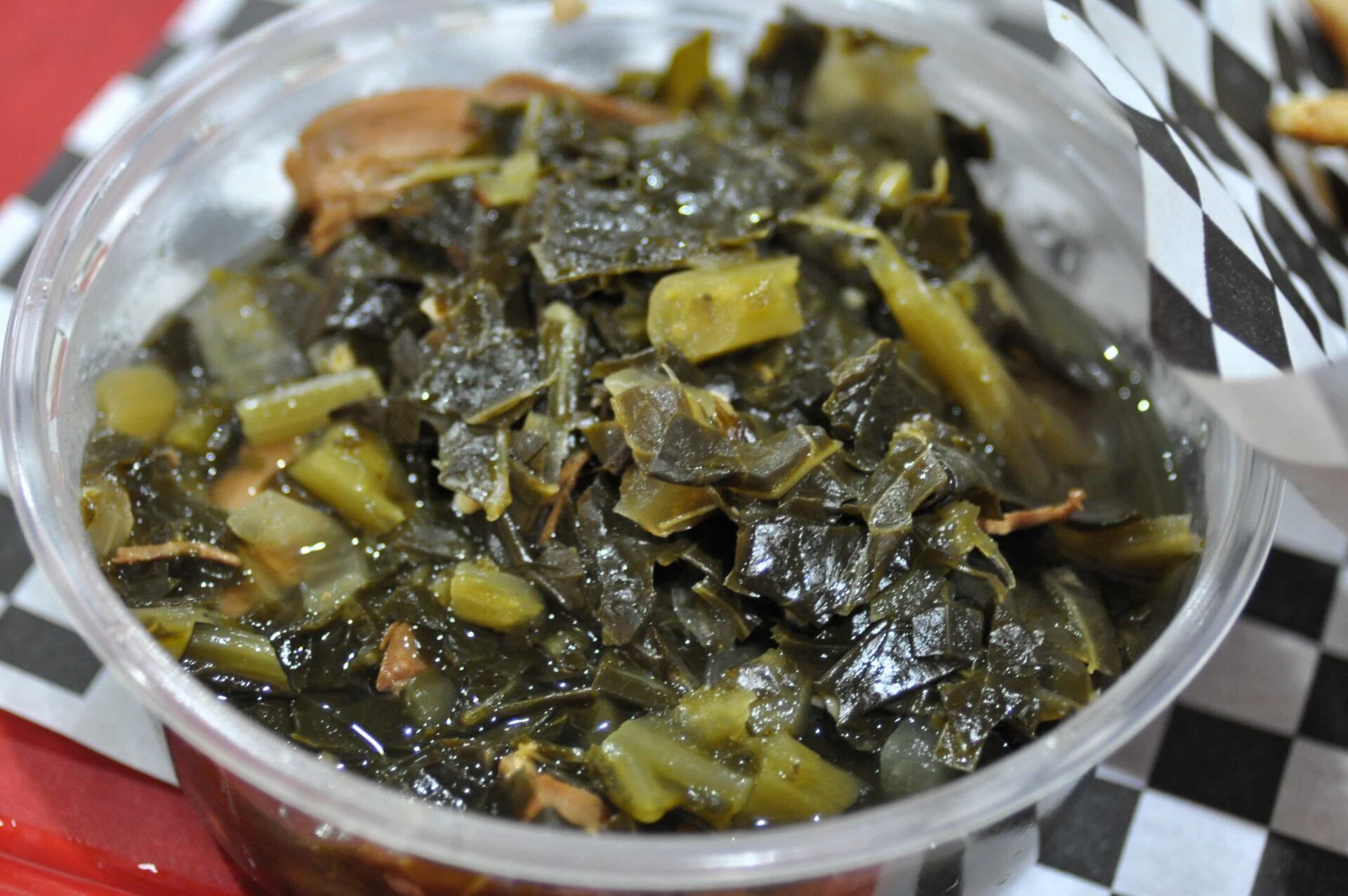
A pot of collard greens is a beautiful sight in the eyes of many southerners. Collard greens are a one-pot recipe. To prepare this dish, bring water to a boil and add smoked meat (such as turkey or pork) and simmer. Remove the meat from the water and, if necessary, remove any bones. The goal here is to season the water with the flavors of the meat. Then the chopped collards are packed into the pot. At this point, add the preferred seasonings to the pot, such as garlic powder and onion powder. The smoked meat is added back in, along with chicken bouillon. At this point, lower the heat, cover, and simmer. From here, some people add apple cider vinegar and sugar. Be sure to season to taste, stir, cover, and continue cooking until tender. The collards are ready to serve. Be sure to save the liquid from the greens.
Collards originated as a wild plant on the northern shores of the Mediterranean and the Atlantic shores of England, France, and Spain. They belong to the cabbage family. Early cultivation of collards can be traced to the Greeks and Romans. Botanical historians believe the plant was domesticated roughly 3,000 years ago.
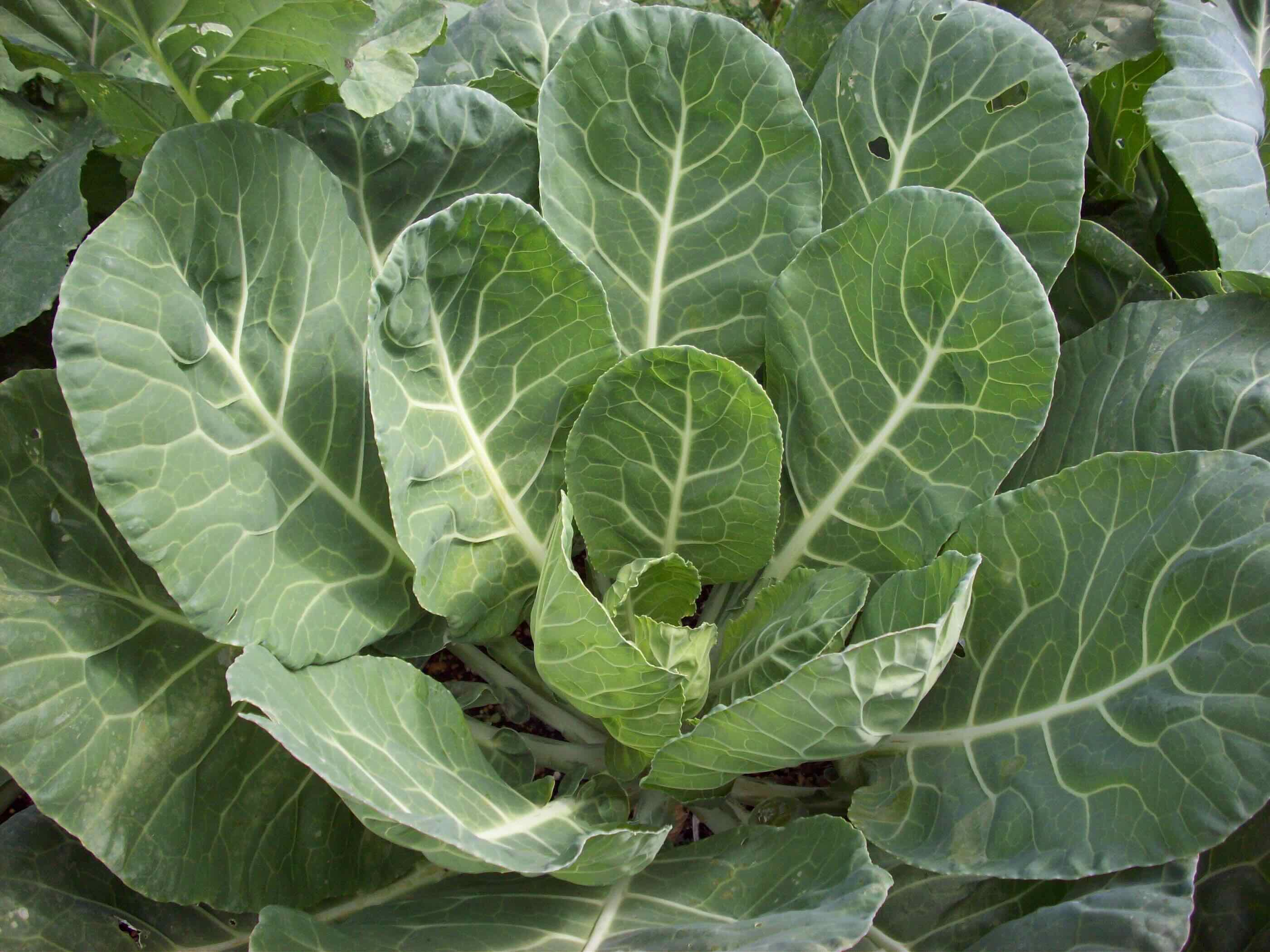
Collard greens before they are pulled from the ground. Courtesy of Eric Bronson. CC- BY 2.0.
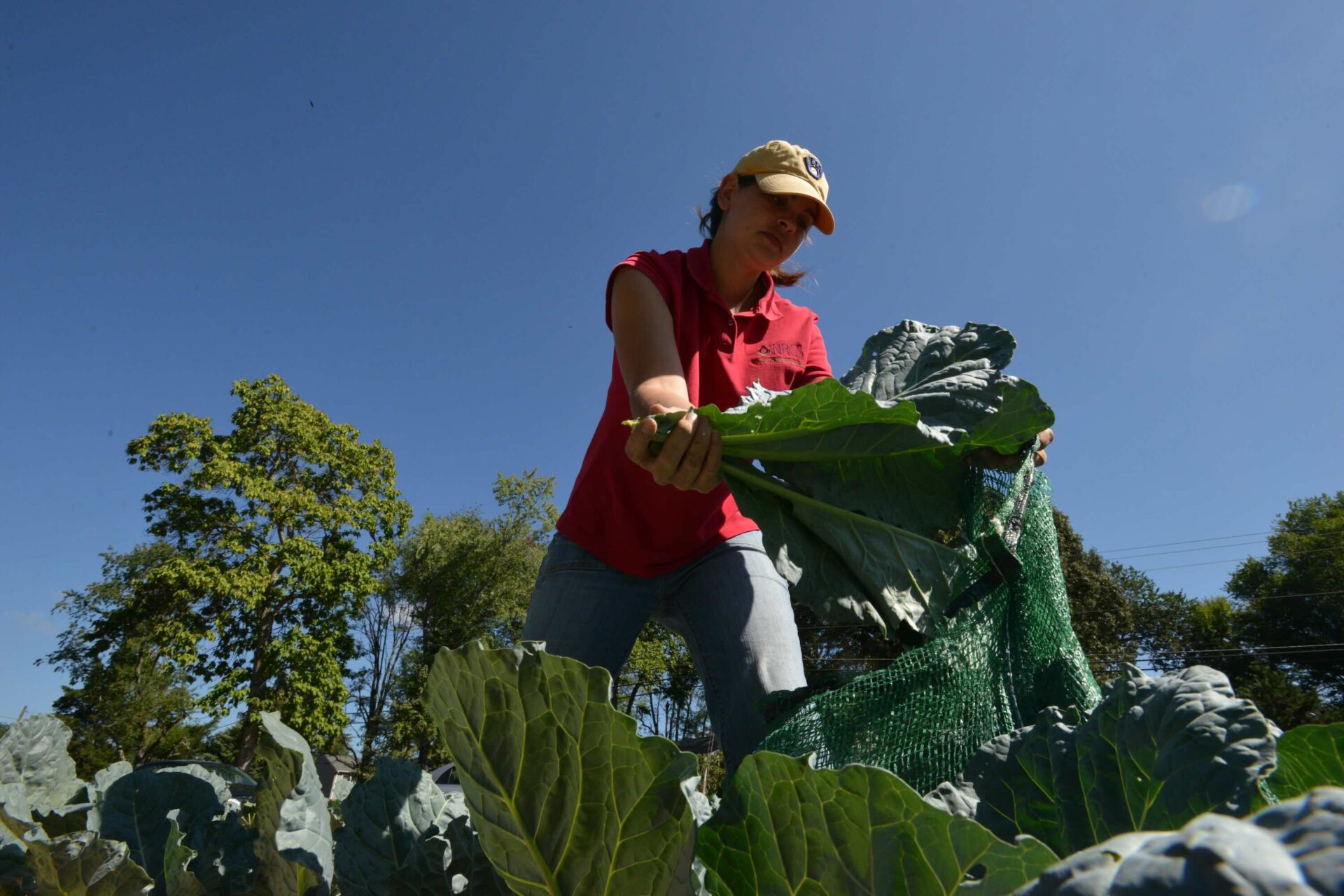
A United States Department of Agriculture (USDA) volunteer harvesting collard greens at Miller Farms in Clinton, Maryland. Courtesy of USDA.
Collards first arrived in the Americas with the arrival of Dutch and Portuguese colonizers in the 17th century. The name collards comes from the English word “colewort.” Colewort is a medieval term for non-heading wild cabbage. Colewort, by way of the southern dialect, became “collerds” with an enslaved community in Hanover County, Virginia.
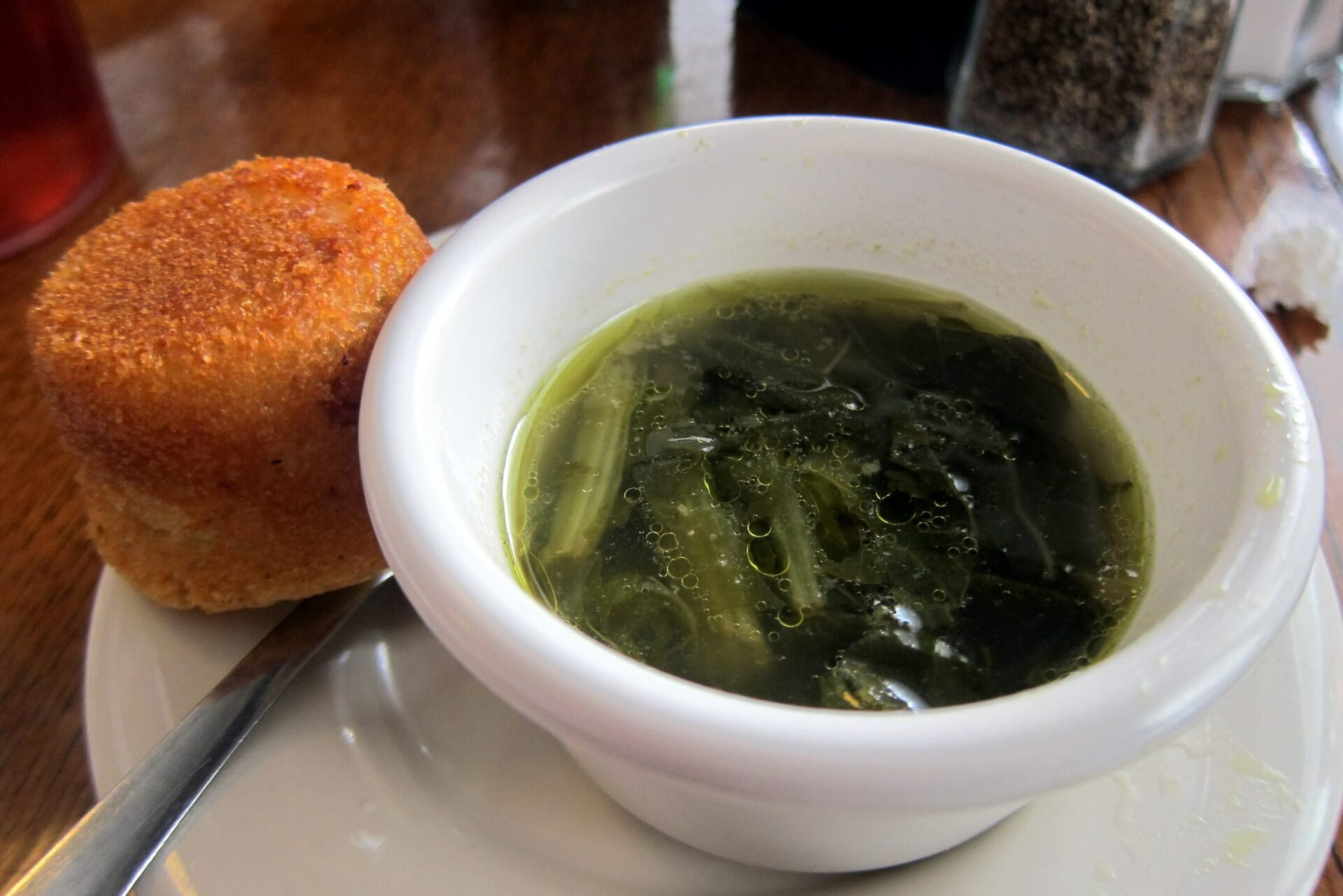
Although West Africans frequently ate leafy greens, such as collard greens, these are not native to Africa. Researchers suggest that collards arrived in Morocco from Iraq and Oman through Muslim traders in the eighth century. From Morocco, collards made their way to the southern parts of the West African coast. West Africans used collards and other leafy greens to make stews. So, enslaved people in the United States used collards to supplement their diets and used what they had on hand to survive. The concept of stewing greens into a low gravy is of West African origin, as is drinking or sopping up (with cornbread or other breads) the potlikker. This liquid remains after cooking the collards.
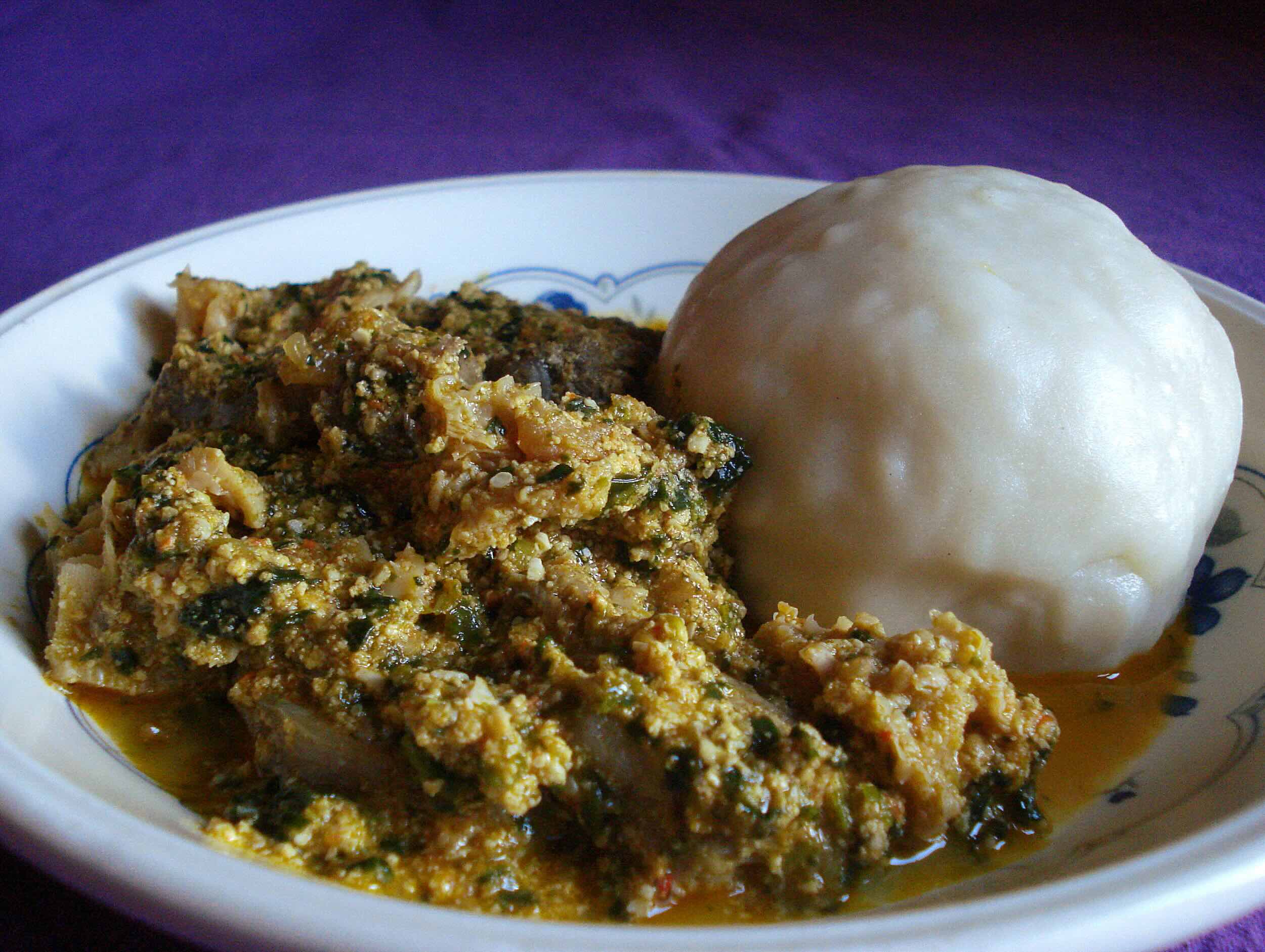
Egusi stew is an example of a dish made with finely chopped leafy greens, such as collards, and ground melon seeds, that West Africans made and continue to make. Here the stew is served with a side of pounded yam. Courtesy of Kake. CC BY-NC-SA 2.0.
Potlikkerwith side of cornbread.Potlikker is the liquid left after cooking collard greens. Courtesy of Wally Gobetz. CC BY-NC-ND 2.0.
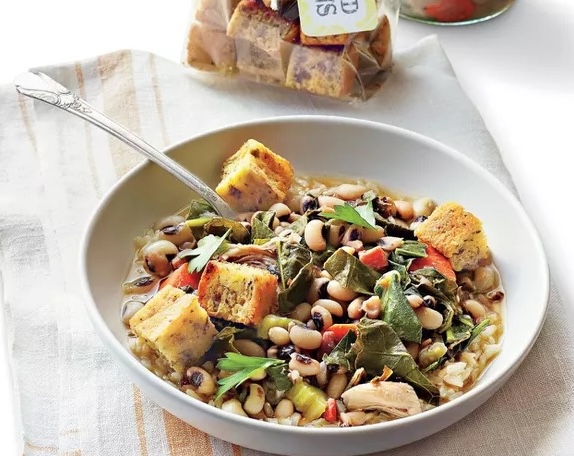
Collards are an integral part of southern cuisine at this point, and, as such, have traditions surrounding them. On New Year’s Day, many African Americans and southerners eat black-eyed peas or Hoppin’ John, collard greens, and cornbread to bring good fortune and luck in the new year. Collards represent paper money, black-eyed peas represent coins, and cornbread represents gold.
Hoppin’ John is very popular and has many variations like this soup that features black-eyed peas, rice, collards, and cornbread croutons. Courtesy of John Autry and Southern Living.
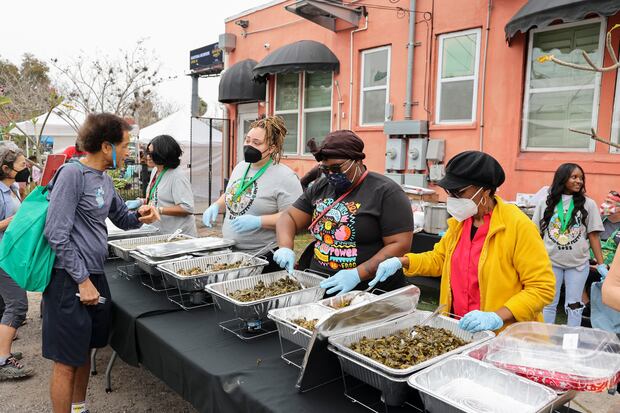
Collards being served at the Tampa Bay Collard Green Festival in St. Petersburg, Florida. Courtesy of Arielle Bader and Tampa Bay Times.
Collards are a one-pot dish that many make at home, but they appear on restaurant menus across the South and the nation. There’s the Tampa Bay Collard Green Festival in St. Petersburg, Florida, which features soul food with an emphasis on collard greens. The festival features live music, local artisans, a farmers’ market, and wine and beer vendors. Collards can be found at soul food restaurants, barbecue joints, and on the menus of fine dining establishments.
A bowl of collard greens. Courtesy of Mark H. Anbinder. CC BY-NC-SA 2.0.