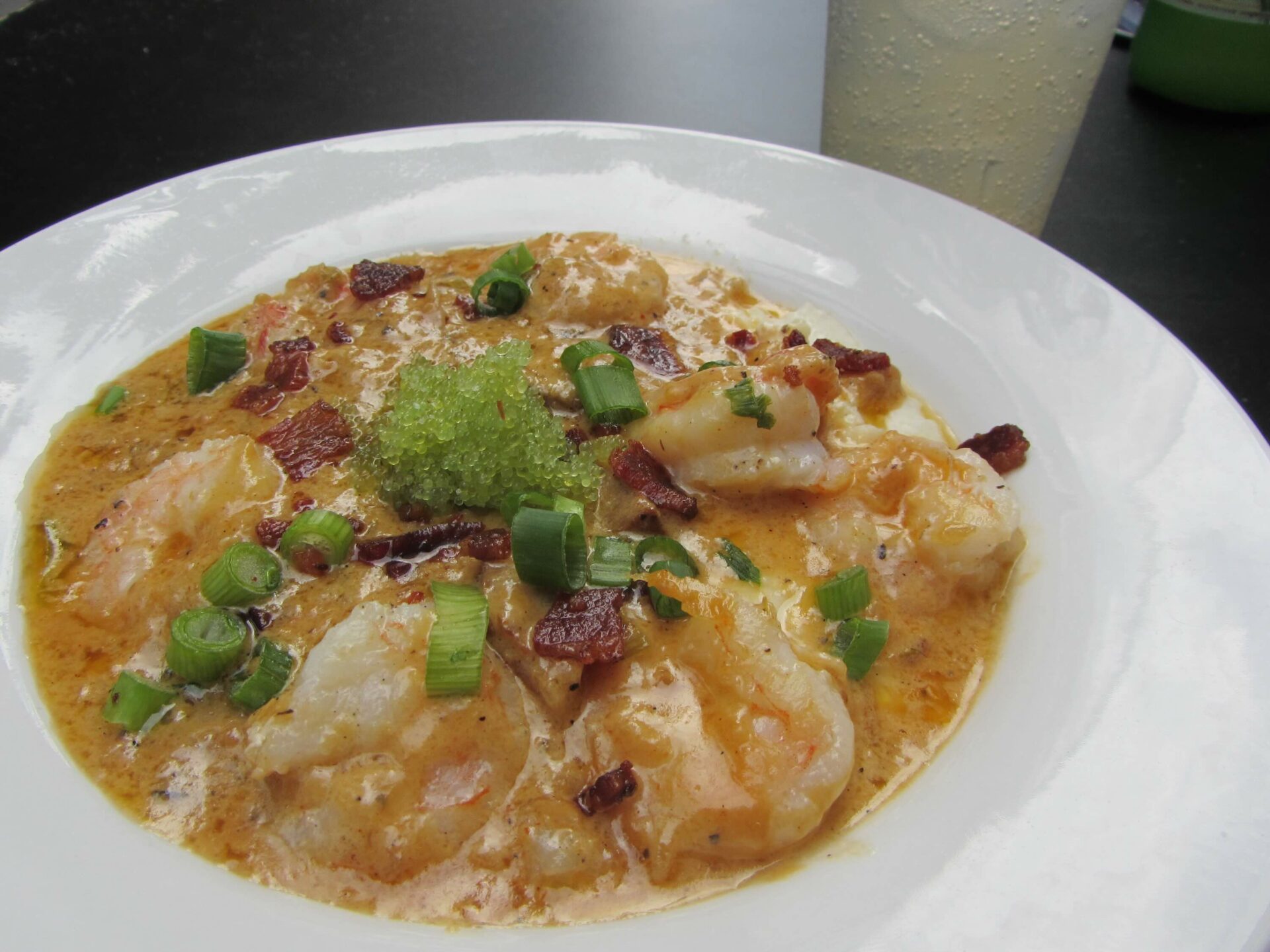
Shrimp and grits, sometimes referred to as breakfast grits, originates in the South Carolina Lowcountry region. It is one of the most popular southern dishes, and a New York Times piece helped it gain popularity nationwide. The dish is relatively simple to prepare. It features a base of grits (sometimes with cheese) topped with fresh, cooked shrimp, smothered in shrimp gravy, and served.
Shrimp and grits is likely the result of blending food traditions from the Gullah Geechee peoples (of West African descent), Indigenous populations, and Europeans. Grits are ground, dried hulled white or yellow corn, sometimes called hominy. Hominy comes from the Algonquin word uskatahomen, which means treated corn. Indigenous populations in North America had been cultivating corn for centuries. Hominy corn is field corn that has been processed to give it a puffy texture. It was from this processing that grits were born and then introduced to the U.S. South.
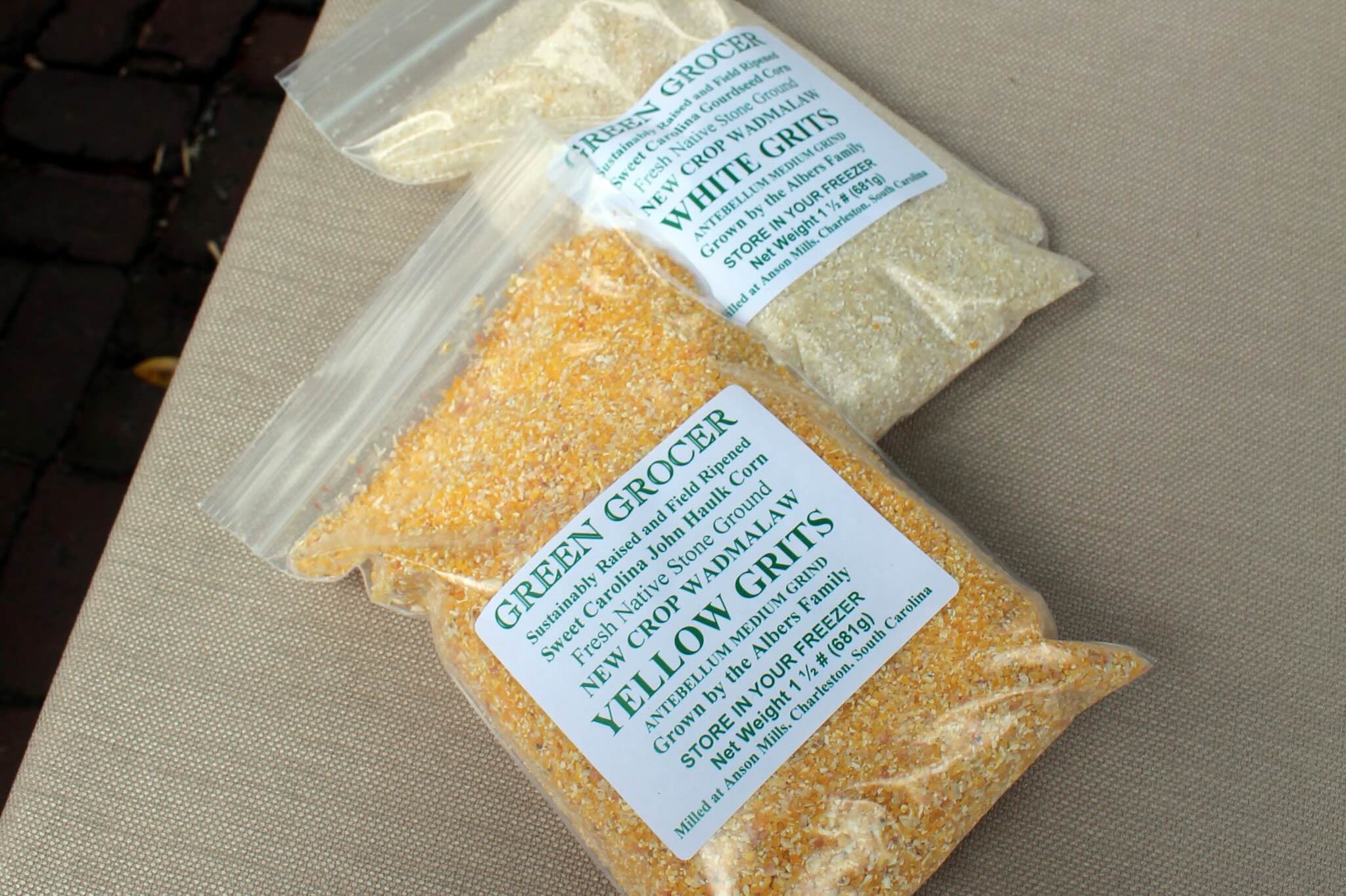
Corn is still grown and milled in South Carolina. These bags of grits were milled at Anson Mills in Charleston. Courtesy of Wally Gobetz. CC BY-NC-ND 2.0.
The Gullah Geechee people combined shrimp with grits to create the shrimp and grits dish. It is important to note that shrimp was a part of the diet of Western Africans, and enslavers would also feed shrimp to the enslaved, because shrimp were considered undesirable. Shrimp and grits reflect the ingenuity and resourcefulness of the Gullah Geechee people, and shrimp may have been a flavor that evoked memories of home.
Shrimp is one of America’s most popular seafoods, and grits are a common staple in the South. South Carolina, where shrimp and grits are from, is home to three species of shrimp. Brown, white, and pink shrimp can all be found in South Carolina’s waters; all three have a similar taste.
The precise kitchen origin of shrimp and grits is unknown, as there is no clear documentation. Historically, shrimp and grits is a Lowcountry specialty, especially popular in Charleston, South Carolina. The dish was originally called shrimp and hominy (dried maize). The predecessor of shrimp and grits is shrimp and rice, which was covered in shrimp gravy. Somewhere along the way, grits were substituted for rice.
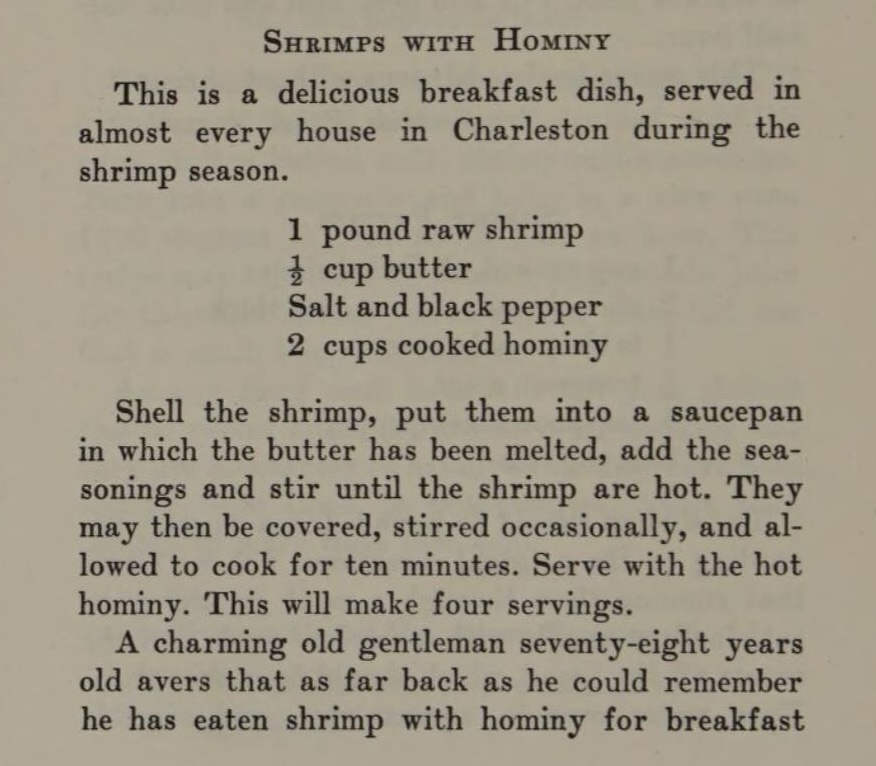
This recipe for shrimp and grits appeared in the cookbook Two Hundred Years of Charleston Cooking in 1930. Courtesy of Internet Archive.
The earliest known recipe for the dish appeared in the cookbook Two Hundred Years of Charleston Cooking in 1930. Many hands have contributed to the evolution and popularity of shrimp and grits, but the two people with perhaps the most notable contributions in recent decades were Bill Neal and Craig Claiborne.
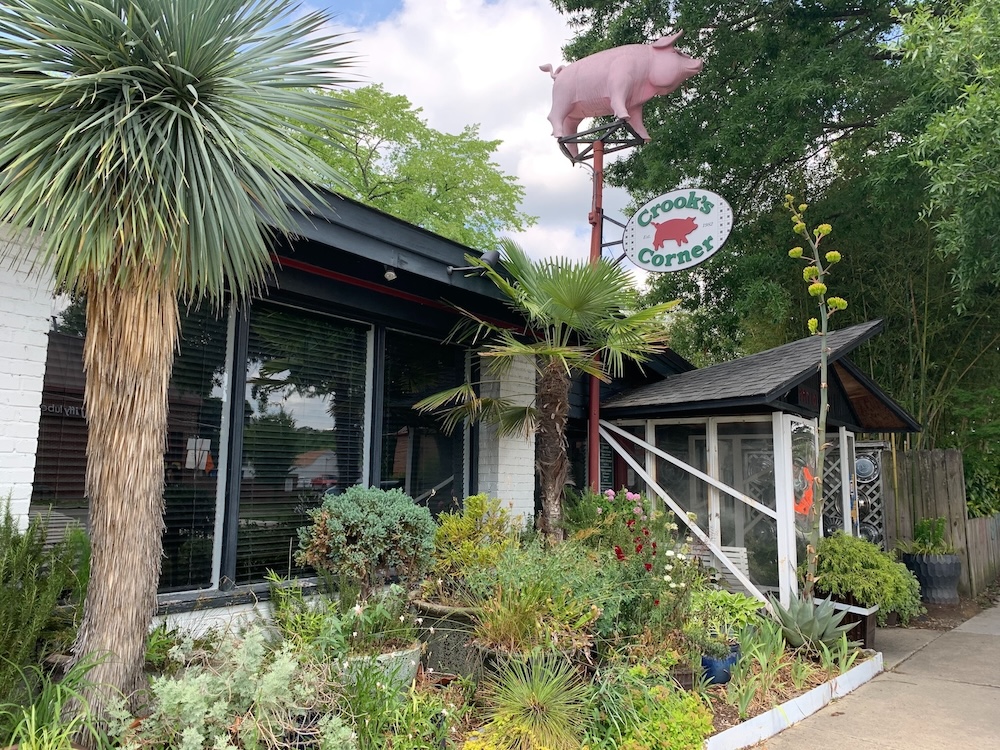
Bill Neal, a North Carolina native, repurposed a Lowcountry breakfast specialty, shrimp and grits, as a dinner entrée in the 1980s. Neal was the chef and owner of Crook’s Corner in Chapel Hill, North Carolina, where shrimp and grits has been served for 40 years. Craig Claiborne, the former food editor of The New York Times, visited North Carolina to research an article and sought a tour of eastern North Carolina barbecue. Claiborne asked Neal to be his guide.
Crook’s Corner Restaurant in Chapel Hill, North Carolina. Courtesy of Chapelboro.
Spending time with Claiborne helped Neal realize the importance of celebrating southern cuisine, and he began to focus on it. Neal stepped away from Crook’s Corner to write a cookbook. During this time, he also hosted Claiborne in his kitchen. Claiborne wrote a profile about Neal in The New York Times. That piece gave shrimp and grits a national platform, skyrocketing its notoriety and popularity not only across the South but also the nation.
Craig Claiborne in 1981. Courtesy of Wikimedia Commons.
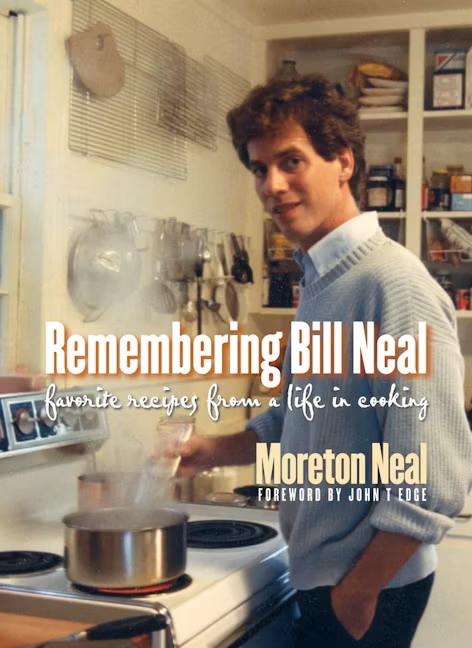
Remembering Bill Neal: Favorite Recipes from a Life in Cooking is part cookbook, part memoir, written by Neal’s wife Moreton Neal in 2004. Courtesy of Richard Fawn and the University of North Carolina Press.
Shrimp and grits appear in restaurants across the country in various forms. Some restaurants keep it simple with just shrimp, grits, and shrimp gravy, while some eateries have fancied up the dish. For example, Magnolias in Charleston, South Carolina offers a Spicy Shrimp & Sausage with creamy white grits and tasso gravy. 131 Main in Charlotte, North Carolina, features a fancified Southern Shrimp and Grits with traditional Cajun Creole sauce, corn salsa, asparagus, and cured ham.
The Green Goddess in New Orleans serves up steaming bowls of shrimp and grits. Courtesy of Jason Reidy. CC BY 2.0.
Shrimp and grits is a dish that was primarily made in home kitchens before Claiborne’s piece, and cooks are still making it at home today. The dish can still be made at home. The late Bill Neal’s recipe for shrimp and grits can be found in Our State magazine.