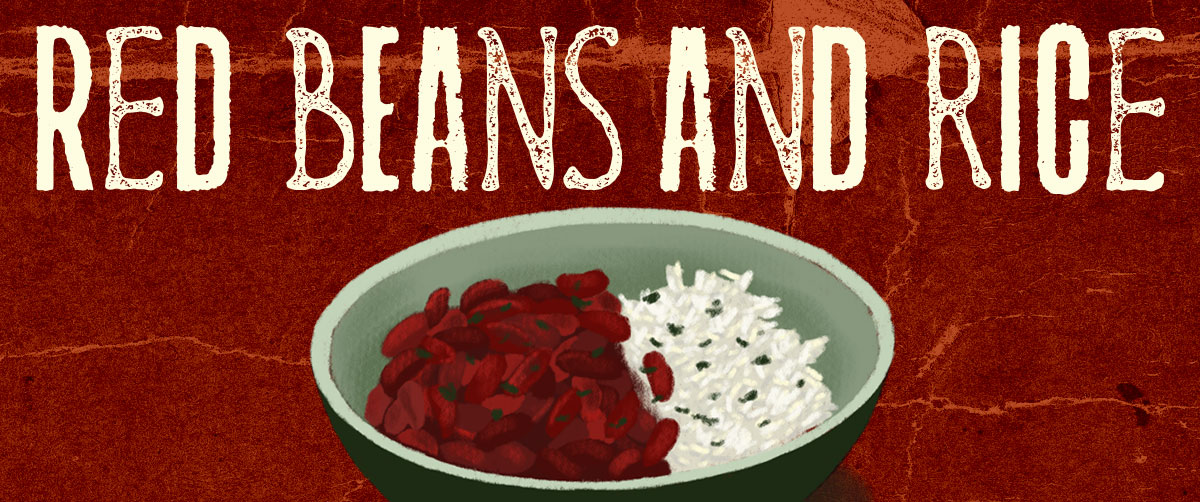
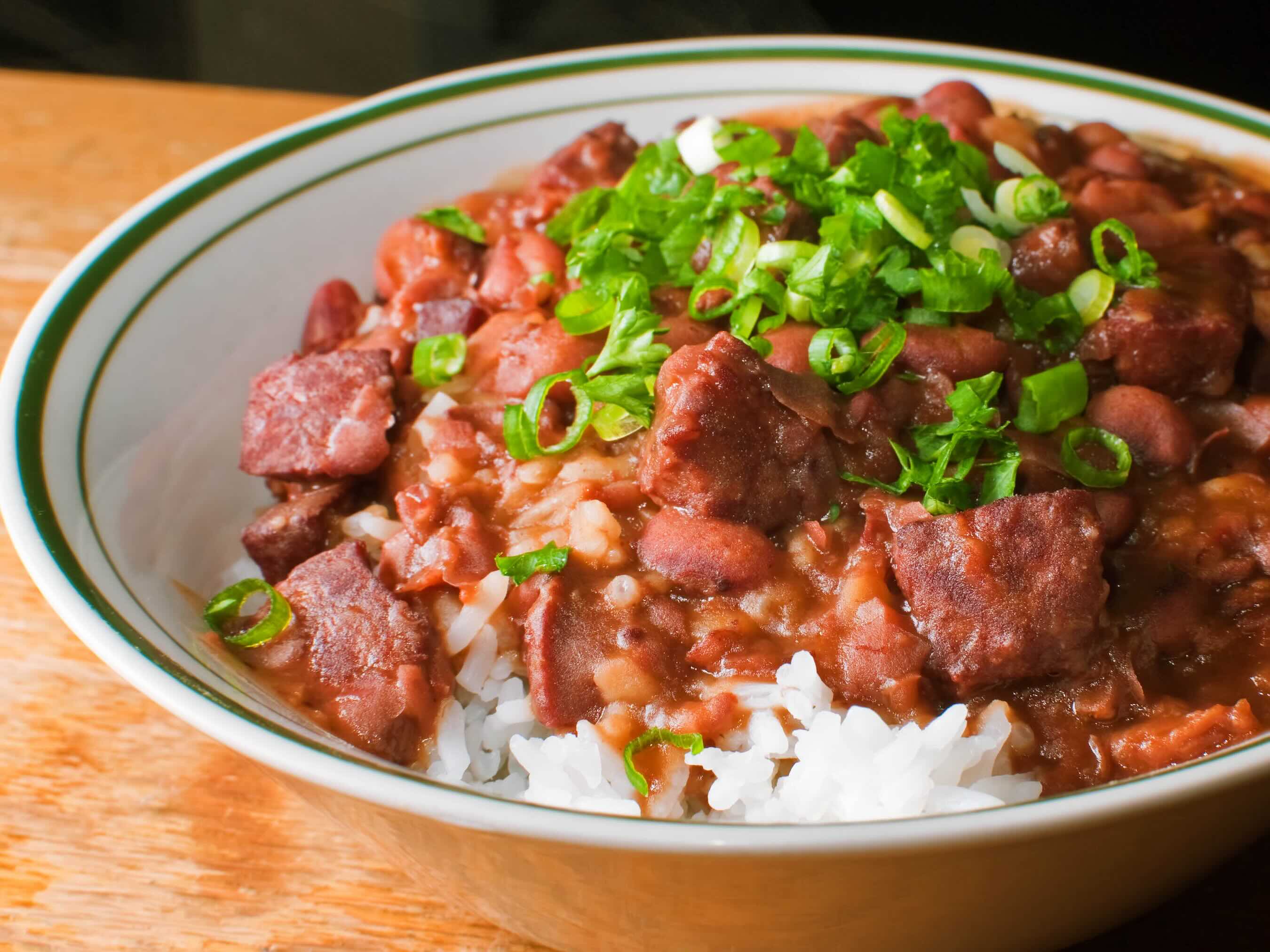
Red beans and rice are a delicious staple in Louisiana. Red beans are the perfect choice for this dish, and rice as an accompaniment takes it over the top. Brittany Cooper, a native Louisianian, has a great recipe for this dish: take a pound of cleaned and drained red kidney beans and bring them to a boil. Then, turn off the heat and let the beans soak for 1-2 hours. Drain the beans, then slice and fry the sausage in the same pot. People in Louisiana like the Double D brand of smoked sausage. Add aromatics like onion, celery, and garlic, then sauté. Next, add water and bouillon cubes, then bring the mixture to a boil. From there, reduce the temperature to a simmer, cover, and cook for 1.5 hours. Then, add the seasoning and butter. Cook uncovered until the beans thicken and serve with rice.
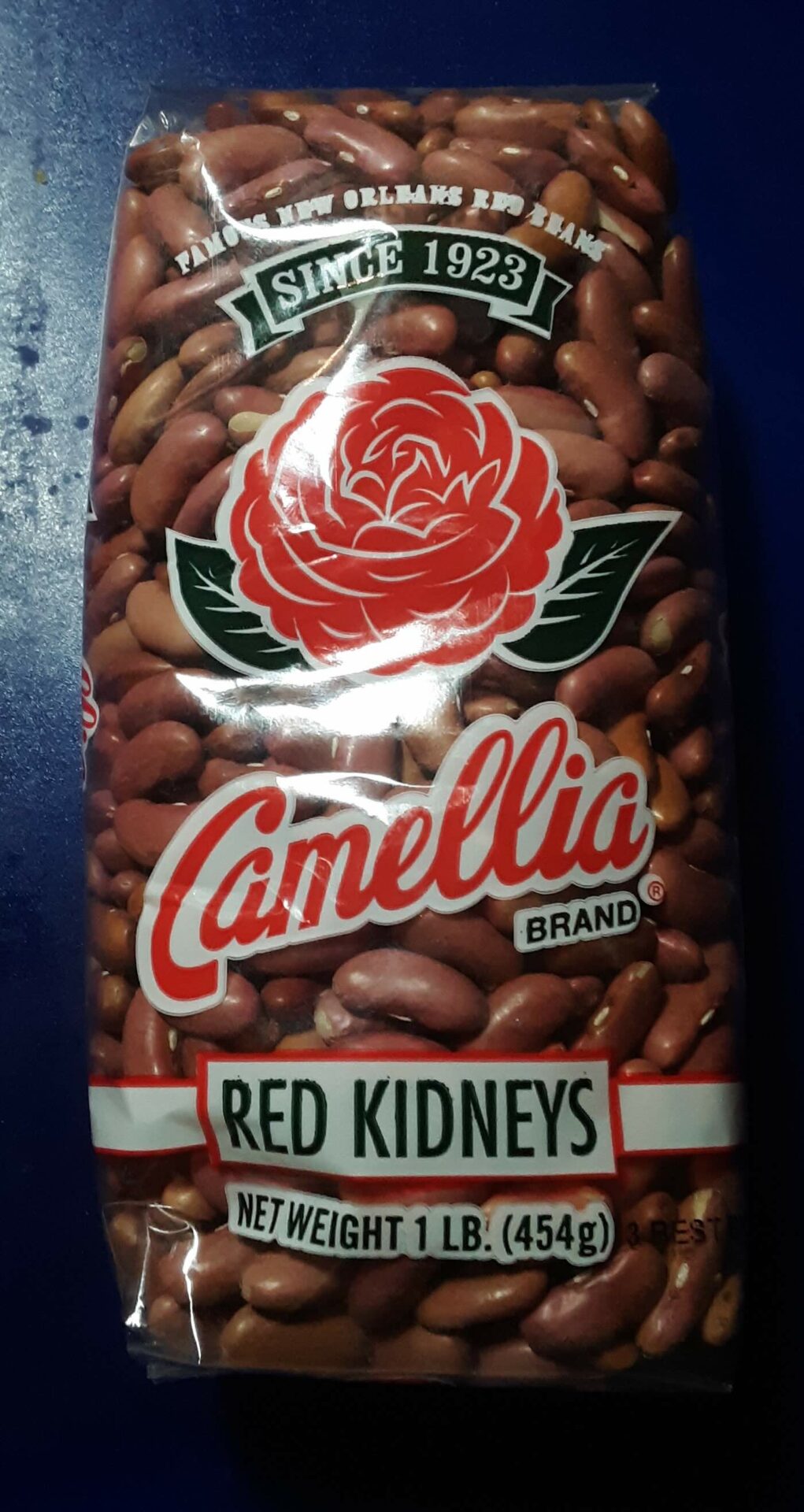
Red kidneys from Camellia Brand. Courtesy of Wikimedia Commons. CC SA 4.0.
One of the stars of this dish is the red kidney bean, which originated in Peru thousands of years ago. The beans were cultivated as early as 8,000 years ago by Indigenous peoples as they migrated throughout North and South America. European colonization also contributed to the spread of the legume. Red beans were cultivated in Colonial America and later by Acadians (descendants of French settlers) in Louisiana. Today, the leading producers of red beans are located in Minnesota, New York, Colorado, and Michigan. Camellia is the brand of choice for red beans in Louisiana.
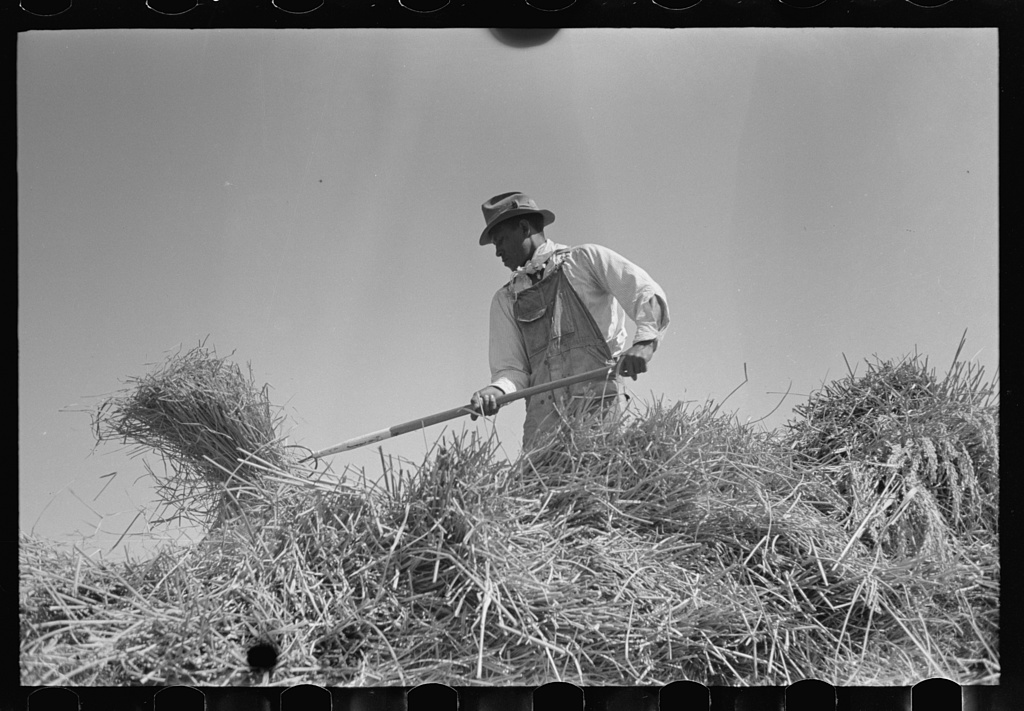
Rice is the other star of the dish. Rice cultivation dates back thousands of years, and evidence suggests it was domesticated in China as early as 2800 B.C.E. Rice arrived in the Americas in the 17th century by way of the transatlantic slave trade. Rice cultivation in Louisiana took off in the 19th century for several reasons. First, the arrival of the railroad in the mid-1880s allowed rice to reach markets quickly, reducing shipping costs and increasing profit margins. Second, farmers refined their rice cultivation methods, now employing techniques suited explicitly to Louisiana’s climate and soil conditions.
A worker pitching bundles of rice near Crowley, Louisiana. Courtesy of Russell Lee and the Library of Congress.
Red beans and rice are a product of the blending of culinary traditions influenced by African, Spanish, French, and Haitian cultures. African culinary traditions introduced the concept of slow-cooked beans. When Haitians arrived in New Orleans between 1809 and 1810, they added Epis, a major seasoning blend in Haitian cuisine. An early printed recipe for red beans and rice appeared in a 1901 edition of The Picayune Creole Cook Book. Hundreds of years earlier, the meal was mentioned in local writings.
Red beans and rice are traditionally prepared and eaten on Mondays, although they can be enjoyed on any day of the week. The reasoning behind the tradition is practical. In many New Orleans homes, Mondays were laundry days. At the time, laundering was a very labor-intensive chore. It was impractical to cook an elaborate meal on that day, so meals that did not require attention were preferred. Women would often use the leftover hambone and meat from Sunday’s dinner to flavor the red beans and rice, which were left to simmer and stew all day on Monday while laundry was being done. At the end of a long Monday, a household would have a flavorful and hearty meal of red beans and rice.
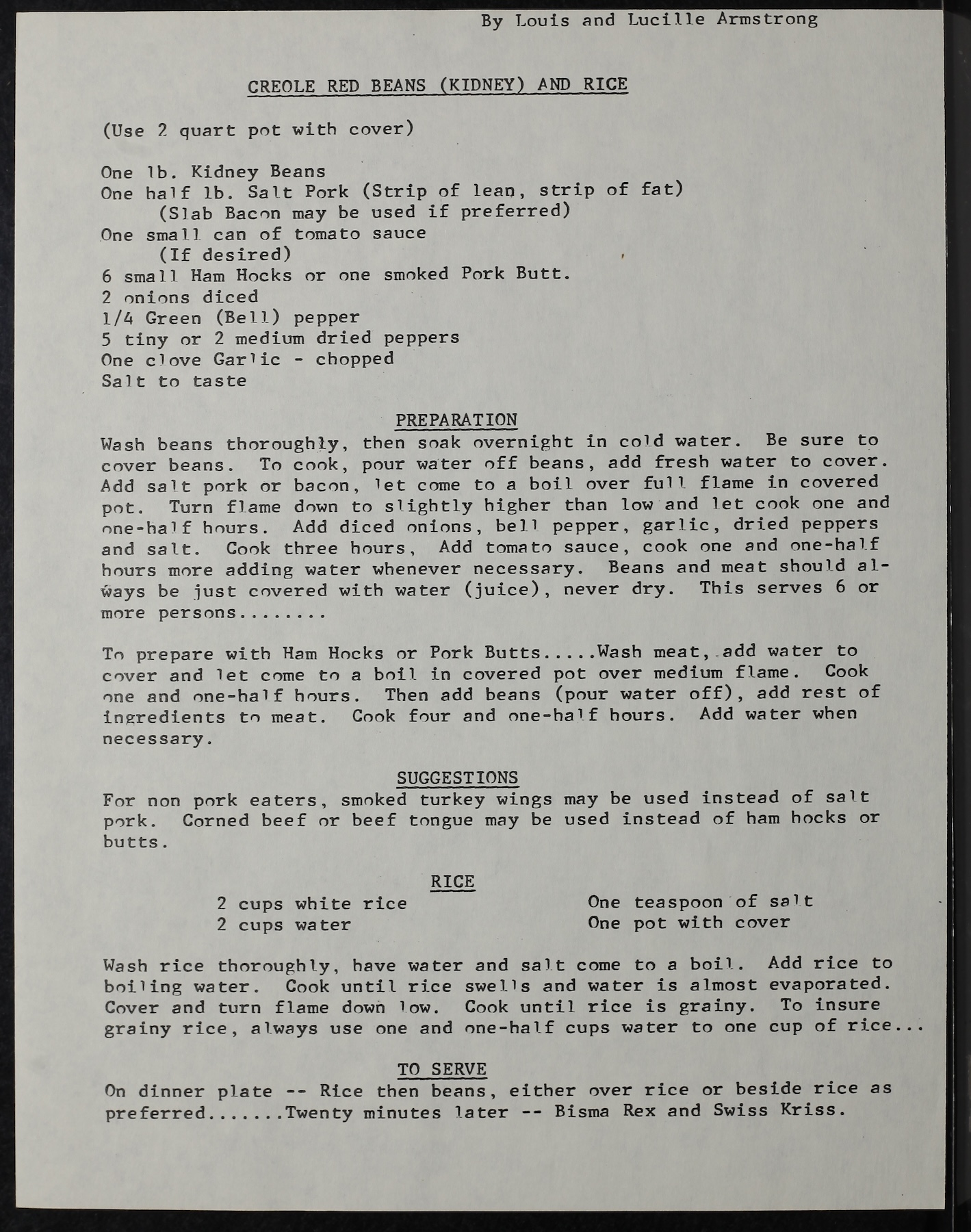
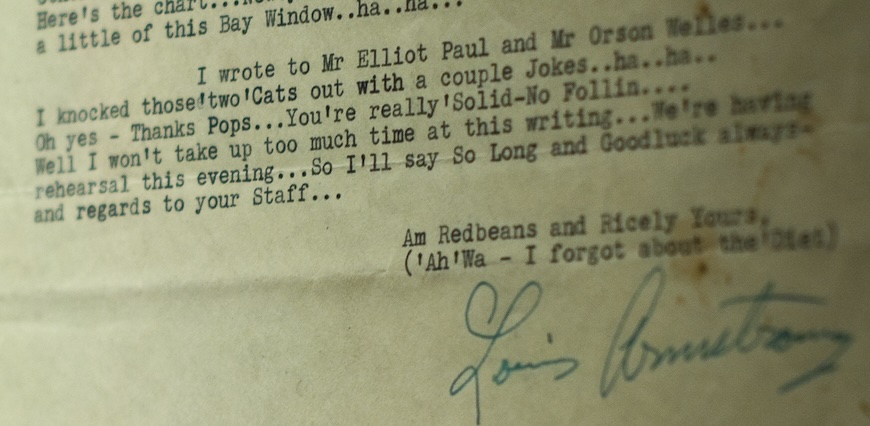
Red beans and rice are beloved by Louisianians and people nationwide. Perhaps one of the most famous people to love the dish was Louis Armstrong. His love for the dish was so strong that he asked his wife, Lucille, to make it for him before he proposed. Later in life, Armstrong would even sign his letters “Red Beans and Ricely Yours.”
Creole Red Beans and Rice recipe by Louis and Lucille Armstrong. Courtesy of Louis Armstrong House Museum.
Armstrong signed this letter: “Red Beans and Ricely Yours.” Courtesy of Eric Richardson. CC BY-NC-SA 2.0.
A delicious bowl of red beans and rice. Courtesy of Matthew Mendoza. CC BY-NC-SA 2.0.