Brunswick stew is a hearty and delicious southern food that has been sustaining and warming bellies for centuries. Today, stew masters and home chefs combine meats and poultry, such as chicken, beef, and pork, with vegetables like corn, tomatoes, lima beans, and seasonings, and let it all simmer for hours to form a thick, rich stew of southern goodness.
Today, both Brunswick County in Virginia and Brunswick, Georgia, claim to be the birthplace of Brunswick stew. However, Indigenous peoples of the Southeast had their own Brunswick stew recipes, which are believed to predate the origin stories of the dish in Georgia and Virginia. In precolonial times, Indigenous cooks included meat from what they could hunt, catch, or grow on their lands. So, animals like squirrels, groundhogs, bears, and deer, as well as vegetables and grains like hominy, corn, and squash. They would stew this, and it became a communal dish amongst Indigenous tribes.
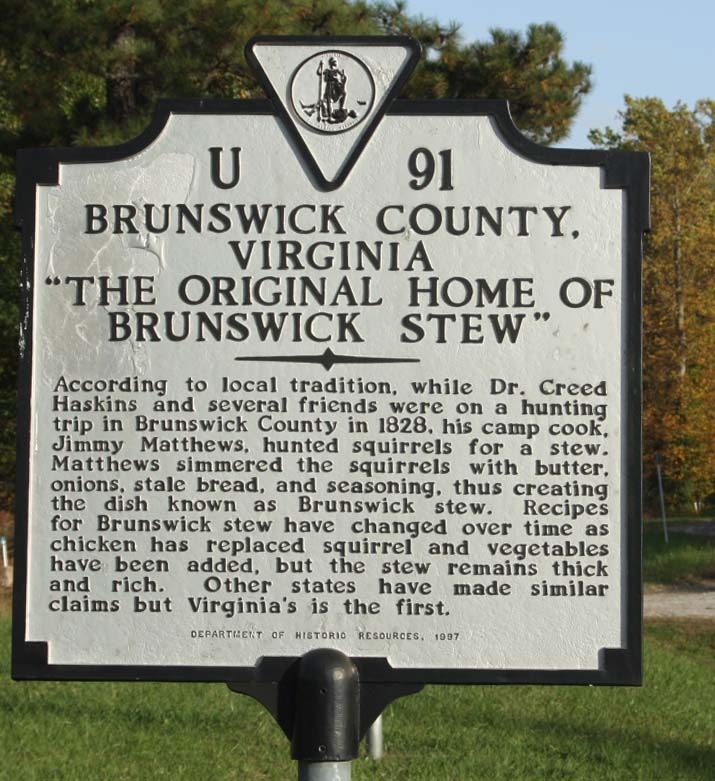
Virginia has the earliest claim to Brunswick stew; its claim dates back to 1828. As legend would have it, Dr. Creed Haskins, a member of the Virginia House of Delegates from 1839 to 1841, led a hunting party on the banks of the Nottaway River. Haskins enslaved a man, “Uncle” Jimmy Matthews, who prepared a simple stew of squirrels that he had hunted earlier, along with butter, onions, and stale bread, when Haskins and his associates returned from their hunting trip to camp and found Matthews stirring the stew he had made. Although hesitant, Haskins and his party tried the stew and loved it, even asking for seconds. Matthews had created the first Brunswick stew.
A newer take on the iconic VIRGINIA IS FOR LOVERS. This logo first appeared in February 2020. Courtesy of Visit Brunswick County VA.
A 2012 image of a historical marker dedicated to Brunswick County, Virginia, “The Original Home of Brunswick Stew. “ Courtesy of Mike Stroud and the Historical Marker Database.
Uncle Jimmy Matthews is credited with creating Brunswick stew, but his original recipe hasn’t been followed in quite some time. Haskins added brandy or wine to the Brunswick stew to enhance its flavor. Authentic Brunswick stew typically uses squirrel, opossum, or rabbit as its main ingredients. Around the turn of the century, people began adding vegetables to their stews. Today, squirrels aren’t typically found in the stew, as stew masters have added meats that are more easily obtained and accessible, such as beef, pork, and chicken.
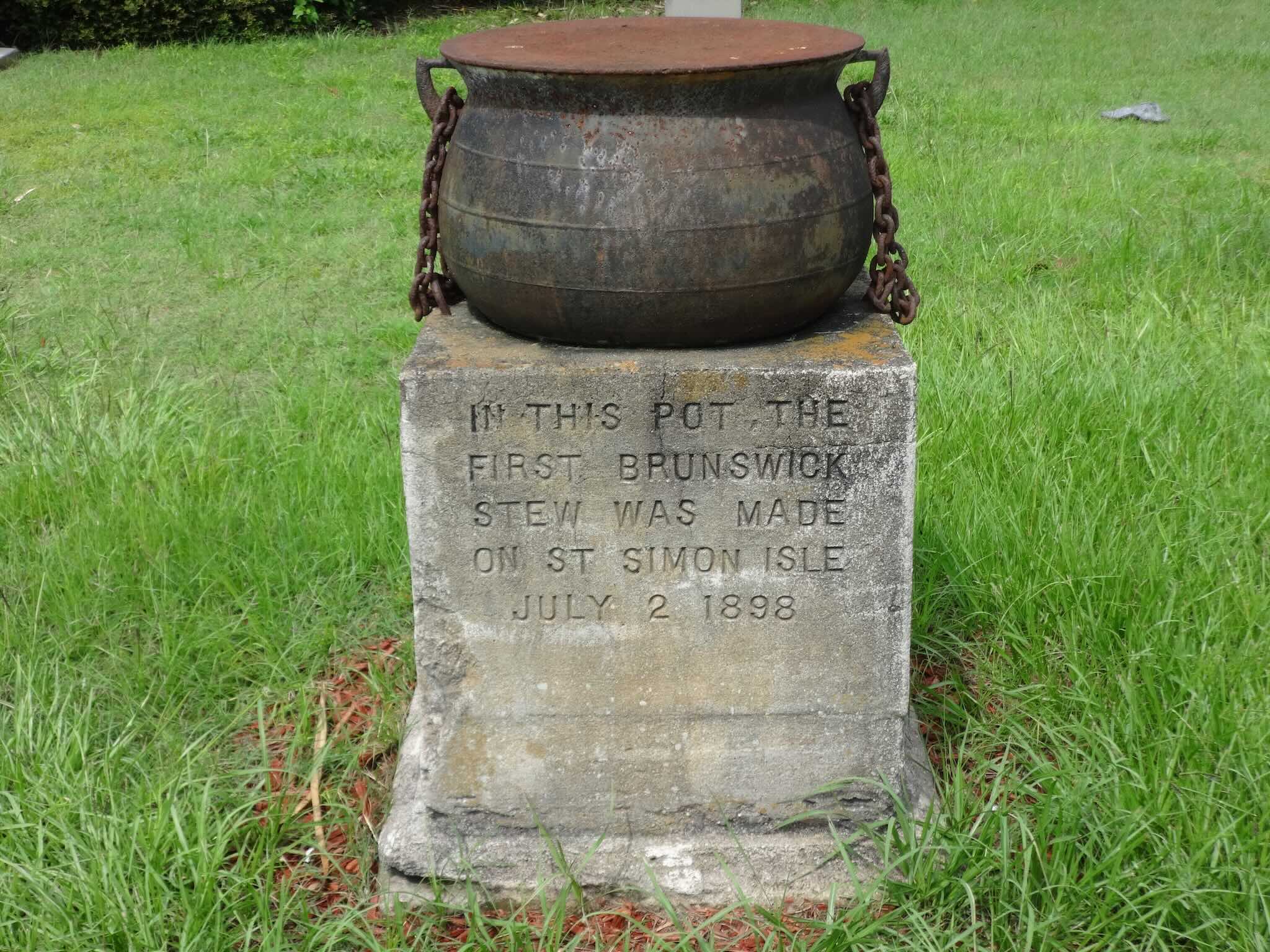
Different southern states have distinct flavors and twists that are incorporated into the stew. In Virginia, people primarily use chicken as their main meat, with some rabbit also included. In Georgia, people often use a mixture of pork and beef and tend to use hotter seasonings. Georgia’s claim to Brunswick stew dates back to 1898. The city has erected a large 25-gallon iron pot with this inscription: “in this pot, the first Brunswick stew was made on St Simon Isle July 2 1898.”
The Brunswick Stew Pot Monument in Mary Ross Park, Brunswick, Georgia, in 2015. Courtesyof Michael Rivera. CC BY-SA 4.0.
Author Marjorie Kinnan Rawlings said Brunswick stew was Queen Victoria’s favorite dish. Rawlings wrote in her 1942 book, Cross Creek Cookery, that the dish dates back to the Duchy of Brunswick-Lüneburg. Whether a person is from Virginia, Georgia, or the Queen of the United Kingdom, people all around the U.S., the South, and the world enjoy a steaming bowl of Brunswick stew.
Places like Gary Lee’s Market in Brunswick, Georgia, serve steaming bowls of Brunswick stew. In Brunswick County, Virginia, fans of the stew can take the Brunswick Stew Tour, which allows them to visit multiple restaurants and cookeries that feature Brunswick stew. Brunswick stew appears on menus around the South from Slick Pig BBQ in Tennessee to Stallings Rockstore Bar-B-Q to Tom Jenkins’ Bar-B-Q in Florida. Restaurants have helped keep Brunswick stew alive.
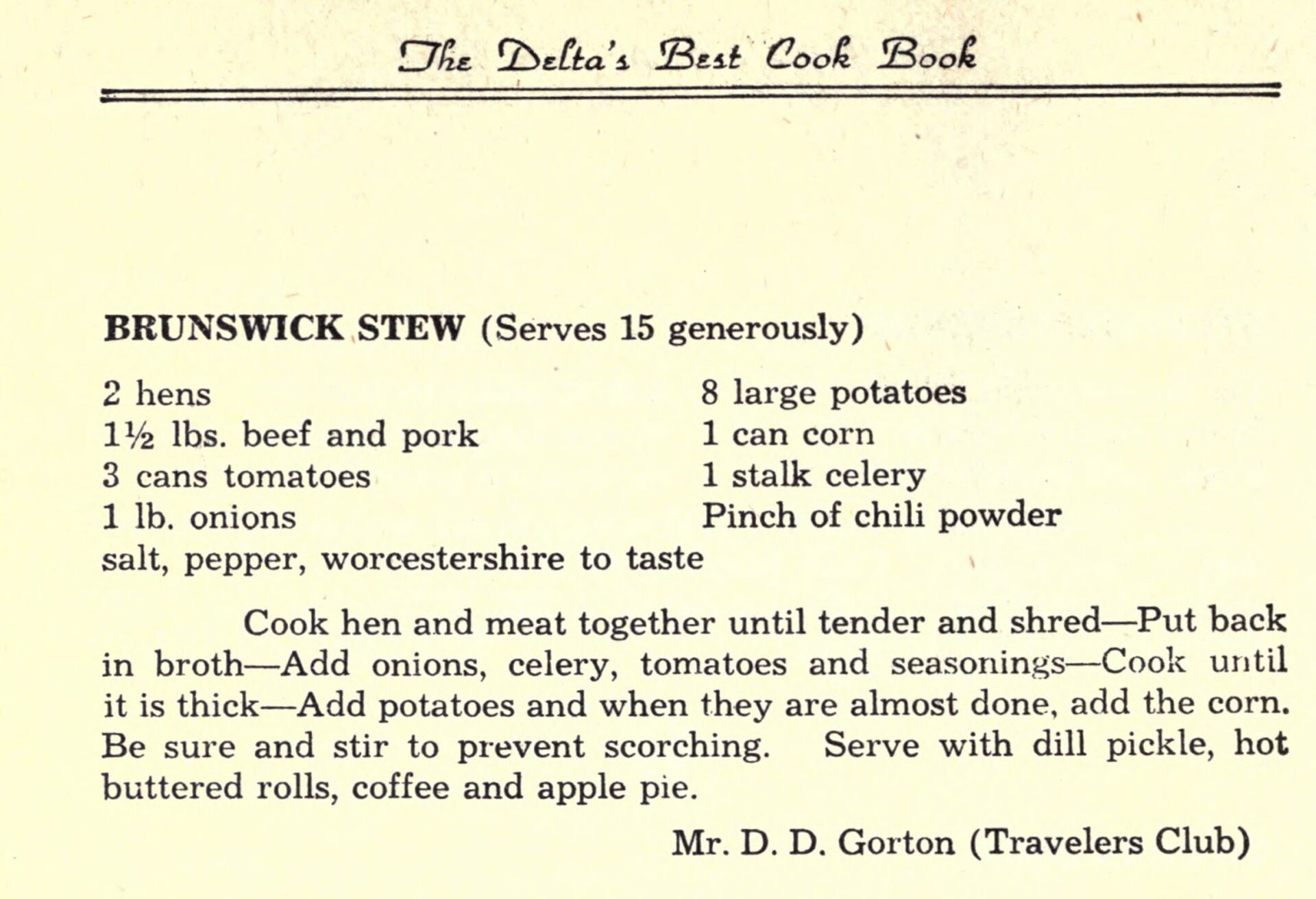
An undated Brunswick Stew recipe found in The Delta’s Best Cook Book. Courtesy of The American Legion Auxiliary and Internet Archive.
Festivals and family traditions have also helped keep Brunswick stew in the hearts and bellies of southerners and non-southerners alike. Many home cooks still prepare Brunswick stew, and the recipes are passed down from generation to generation.
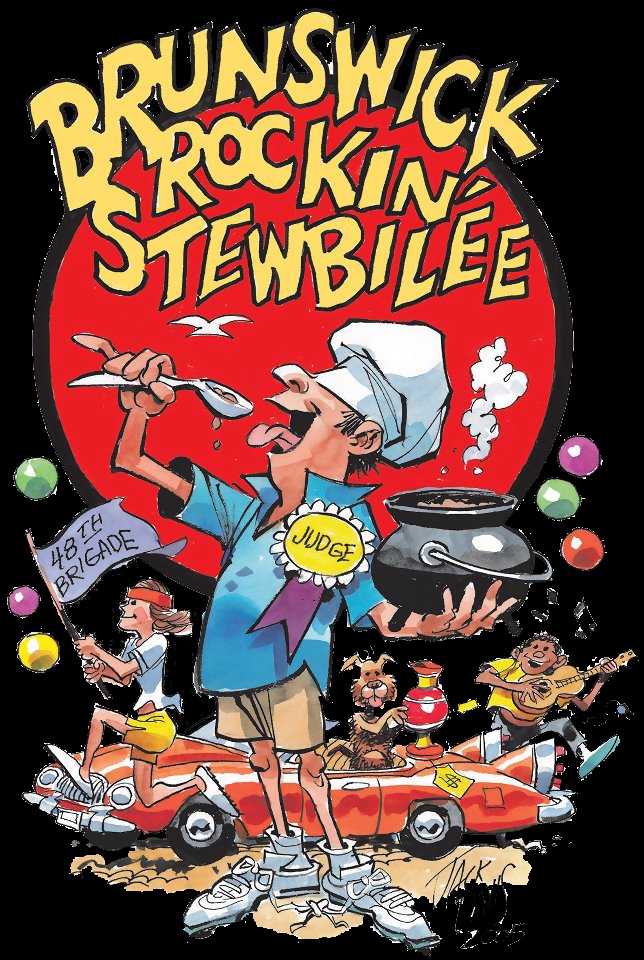
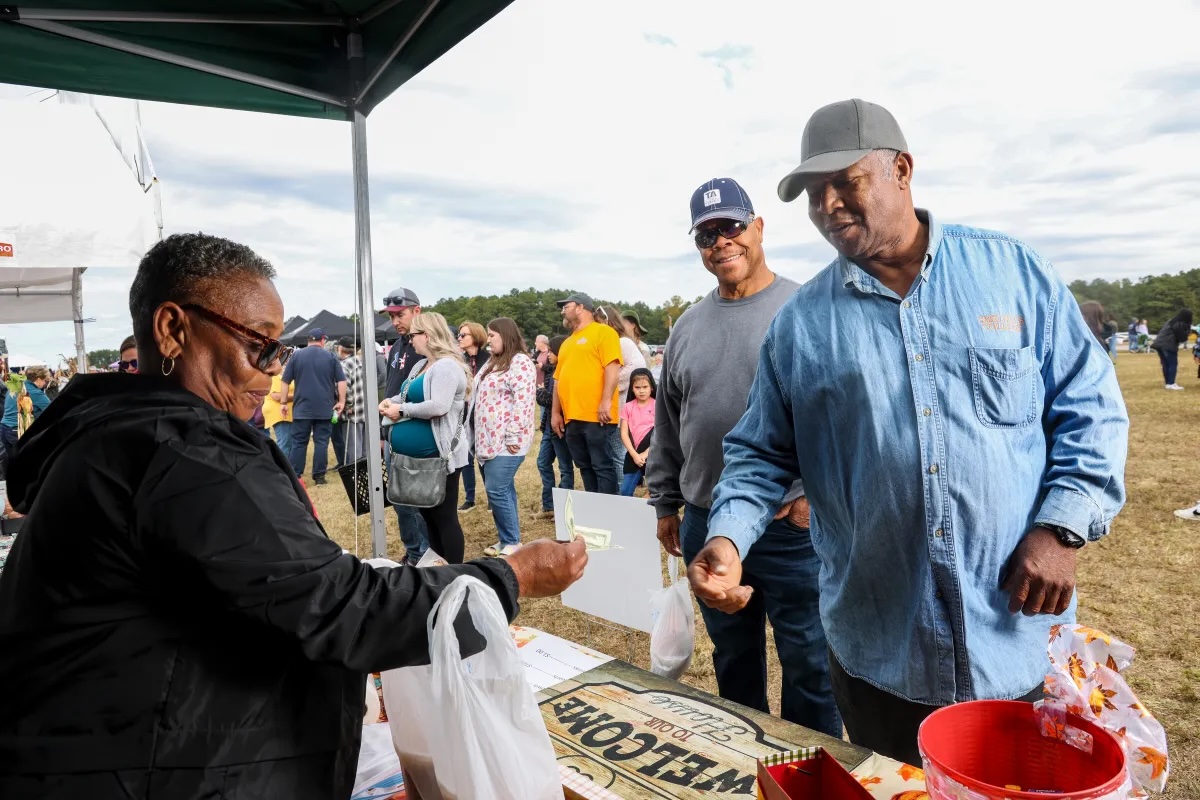
Georgia is home to Brunswick Rockin’ Stewbilee, an annual festival with music, a pooch parade, car shows, and an opportunity to participate in a Brunswick stew cook-off. Virginia also hosts its own festival, the Taste of Brunswick Festival, in Lawrenceville, Virginia, which features a Brunswick stew competition, live music, and food.
The logo of the annual Brunswick Rockin’ Stewbilee. In 2026, the event was held on Saturday, February 28 in Brunswick, Georgia. Courtesy of Brunswick Rockin’ Stewbilee.
Festivalgoers purchasing Brunswick stew at the Taste of Brunswick Festival in Lawrenceville, Virginia in 2022. Courtesy of Jennifer Chase / New York Times.
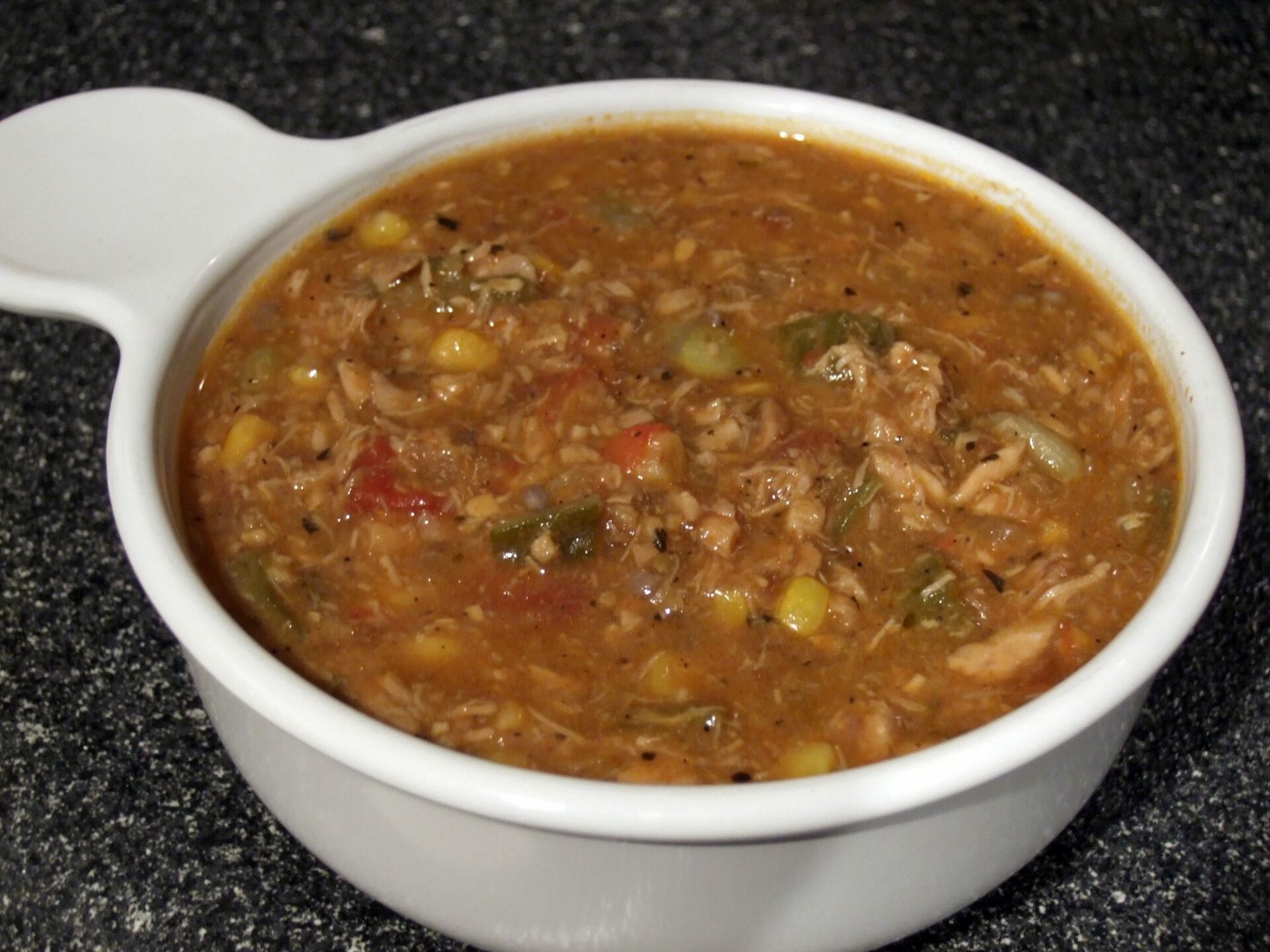
Brunswick stew made with chicken as the main protein. Courtesy of Joe Loong. CC BY 2.0.