
Frequently Asked Questions
About Our Collection
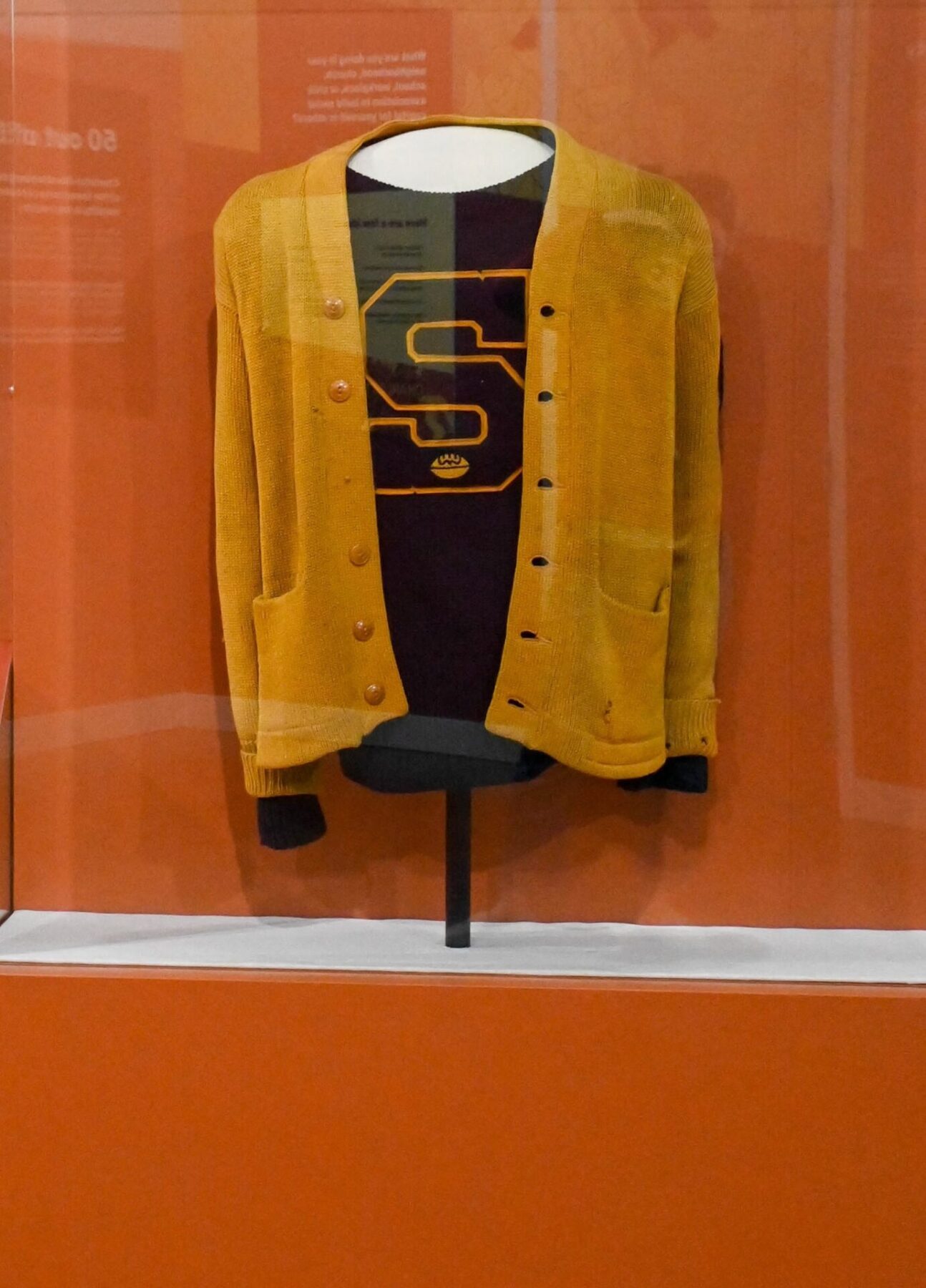
Levine Museum of the New South cares for a growing collection of nearly 6,000 objects. They include photographs, documents, and everyday items that tell the story of Charlotte, North Carolina, and the South. Most of the objects date from after the Civil War to today.
We use these objects to bring history to life through exhibitions, education programs, research, publications, and digital storytelling. They are one of the most powerful ways visitors can connect with the past.
Every object in our collection helps tell the stories of the New South, and helps us connect the past with the future.
What does the museum collect?
We collect objects about the history and culture of:
- Charlotte and the surrounding metro area
- North Carolina
- The South, which we define as 16 states plus Washington, D.C.: Alabama, Arkansas, Delaware, Florida, Georgia, Kentucky, Louisiana, Maryland, Mississippi, North Carolina, Oklahoma, South Carolina, Tennessee, Texas, Virginia, and West Virginia
Our objects date from after the Civil War to the present. They show how people in the region lived, worked, voted, and shaped their communities.
Right now, we are especially interested in objects related to:
- Civil rights
- Housing
- Generational wealth and economic opportunity
- Education
- Religion and faith
- Migration and immigration
- Foodways (the food traditions of a place and its people)
How does the museum get new objects?
Most objects come to us as donations, gifts, or bequests (gifts left in a will). We also accept long-term loans and sometimes purchase objects. Whenever possible, we collect in partnership with the community, so the people whose stories we tell help shape the collection.
What are some highlights of the collection?
- Photographs, papers, and objects that show Charlotte’s change from a farming economy to an industrial one, and later to a modern financial center and diverse, multicultural city.
- Objects from the textile industry, which drove the economy of Charlotte and many other New South cities from the late 1800s through much of the 1900s.
- Materials from local Civil Rights and Black Freedom movements, including scrapbooks of local, state, and national NAACP activities from the 1940s to the 1990s. A tear gas canister used against people protesting police brutality in Charlotte in 2016 connects this history to the present day.
- Objects that document the history of segregation, white supremacy, and racial discrimination in the New South. These include a wooden ballot box from early-1900s Mecklenburg County, when white supremacists used violence to stop Black men and their white supporters from voting, and Ku Klux Klan robes and hoods, which were symbols of intimidation and terror. Few local institutions collect and display objects like these, which challenge the idea that the region’s history is a simple story of progress.
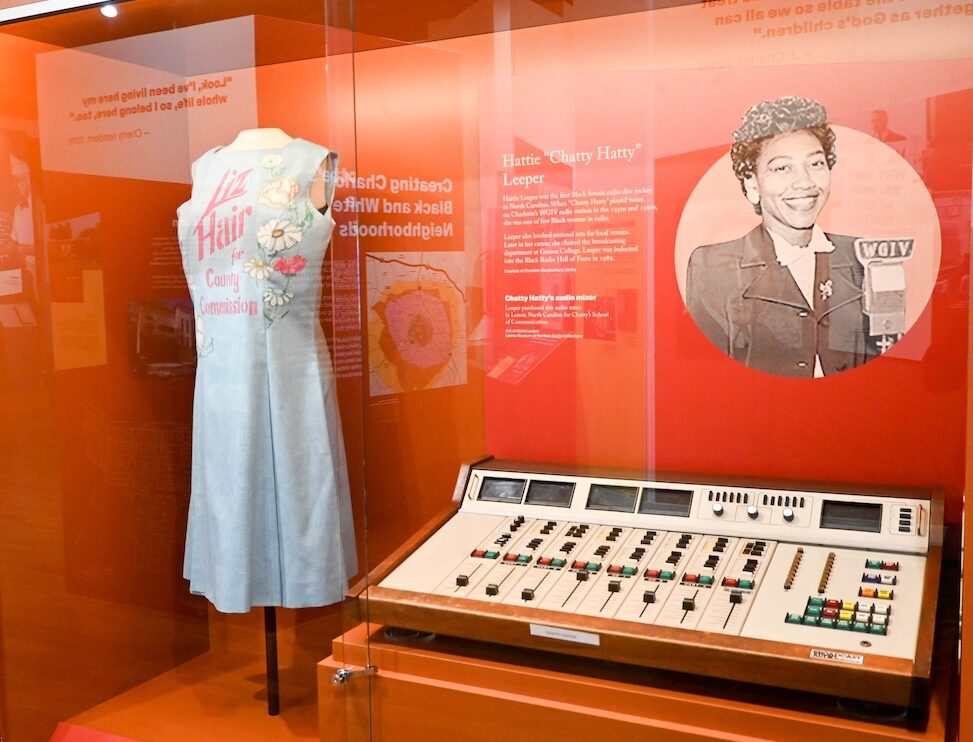
- Objects from the local history of women, the LGBTQ+ community, immigrant communities, banking, sports, and politics. Examples include a campaign dress worn by Liz Hair, the first woman elected to the Mecklenburg Board of County Commissioners, and an audio mixer owned by “Chatty Hatty” Leeper, the first Black woman to work as a radio DJ in North Carolina.
- The archives of YWCA Greater Carolinas, dating back to 1908, including records from the Phyllis Wheatley YWCA in Charlotte’s Brooklyn neighborhood.
- More than 1,200 photographs by photojournalist Don Sturkey documenting Charlotte, Mecklenburg County, and nearby areas in the mid-to-late 1900s.
How does the museum care for its collection?
We follow a Collections Policy and a Collections Plan. Together, they explain how we choose, document, and care for objects, and how we make decisions about adding or removing them. Both follow professional museum standards and all applicable laws. The policy is reviewed every five years.
Both documents are public. To request a copy, email collections@museumofthenewsouth.org.
Can I see objects in the collection?
Yes. Visits to see the collection are by appointment only. To make an appointment or ask a question, email collections@museumofthenewsouth.org.
Can I get copies or images of objects?
Yes. Copies and images are provided for personal research only. By requesting a copy, you agree not to reproduce, publish, broadcast, or sell it beyond what fair use allows unless you have permission from the copyright owner.
Can I publish, exhibit, or broadcast something from the collection?
In many cases, yes. To ask for permission, email collections@museumofthenewsouth.org and include:
- The specific items you want to use
- How you plan to use them (for example, in a book, exhibit, film, or broadcast)
- Your name and contact information
Please keep in mind:
- We review requests in the order we receive them.
- If we approve your request, we will send you a signed permission letter. We do not sign outside contracts or publisher permission forms.
- We can only grant rights that the museum holds. Some items have copyright or donor restrictions, and you are responsible for making sure your use does not violate anyone else’s rights.
- We do not give anyone exclusive rights to an item. The museum may also use the item or allow others to use it.
- You must credit the museum (see below).
- We may decline a request.
How do I credit the museum?
Please use this format:
[Name or description of item]. [Name of collection]. Courtesy of Levine Museum of the New South.
Are there fees for images or permissions?
Fees may apply. See our Licensing and Reproduction Fees for details.
Can I donate an object to the museum?
We welcome donation offers. Please email collections@museumofthenewsouth.org with a description and, if possible, a photo of the item. Please do not bring or mail items to the museum before speaking with our staff.
Can the museum tell me what my object is worth?
No. We do not authenticate objects or provide appraisals.
Who can I contact with other questions?
Email our collections staff at collections@museumofthenewsouth.org.
