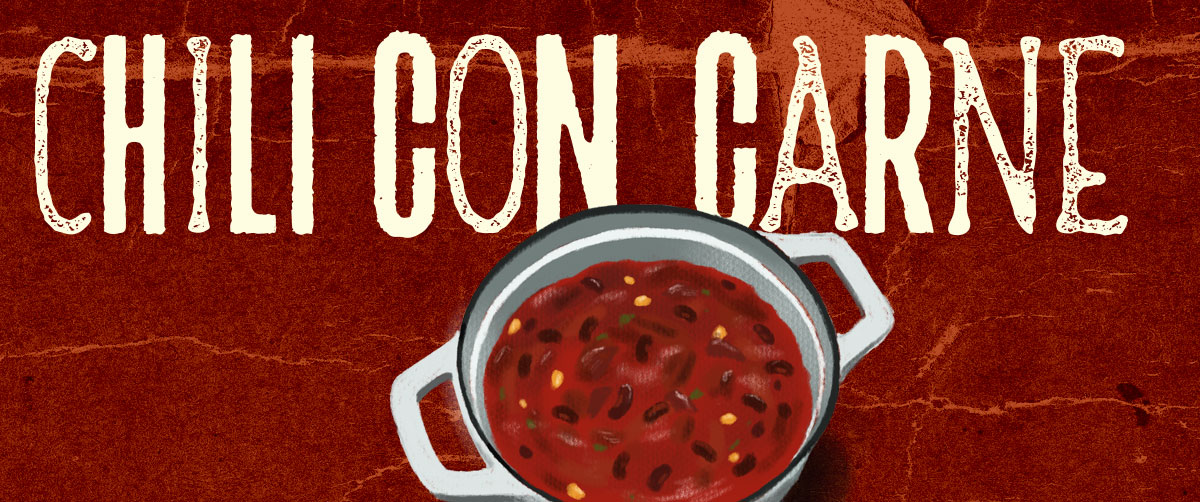
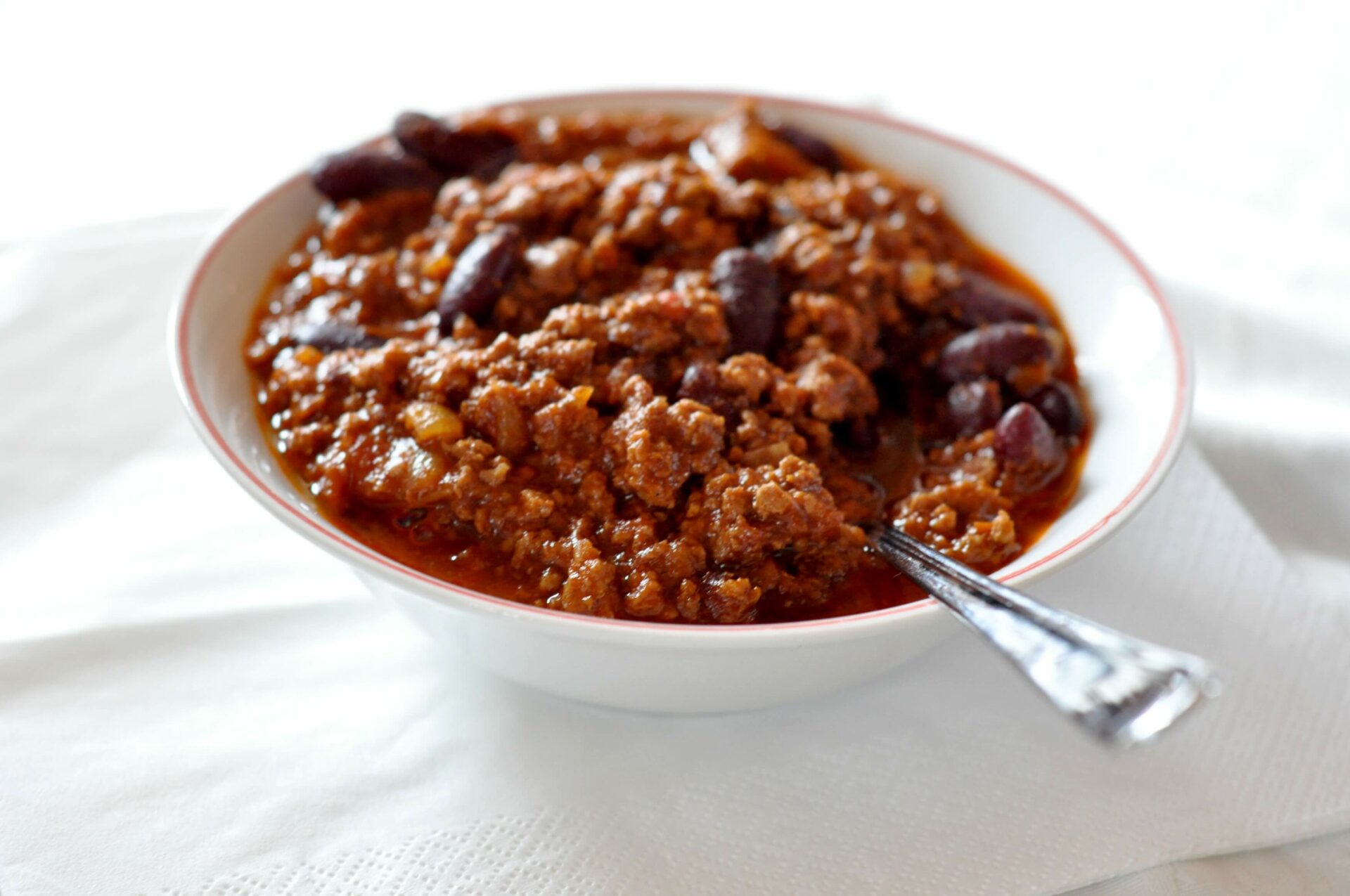
Chili con carne (chili with meat), often shortened to chili, is Texas’s state dish. A good bowl of chili is hearty, warm, spicy, and typically contains beans. Chili con carne is generally made by sautéing garlic, onion, and green bell peppers in a large skillet, followed by the addition of ground beef that’s cooked until nearly brown. Add the chili spice mix to the beef and vegetable mixture and cook the meat until it is browned. Add in crushed and diced tomatoes and allow this to cook for an hour or two, covered on low heat. Serve it in a bowl with toppings like sour cream, avocado, pico de gallo, and cheese.
A 1750 painting of Mary of Jesus of Agreda. Courtesy of Wikimedia Commons.
There are several stories and legends about chili con carne. Perhaps the most famous is the legend of “La Dama de Azul” or “The Lady in Blue.” The Lady in Blue was a 17th-century nun who was somehow known to the Indigenous people of what is today the Southwest United States. The Lady in Blue was Sister Mary of Jesus of Ágreda, known for her mystical bilocation, which allowed her to be in two locations simultaneously. Sister Mary entered a trance-like state and was transported to a distant land (Southwest, United States) where she preached Catholicism and counseled the Indigenous peoples to seek Spanish missionaries. Sister Mary never left Spain, but Spanish missionaries and King Phillip IV of Spain believed she was “La Dama de Azul.” After emerging from one of her trance-like states, she wrote down a chili con carne recipe that called for venison, antelope meat, onions, tomatoes, and chili peppers.
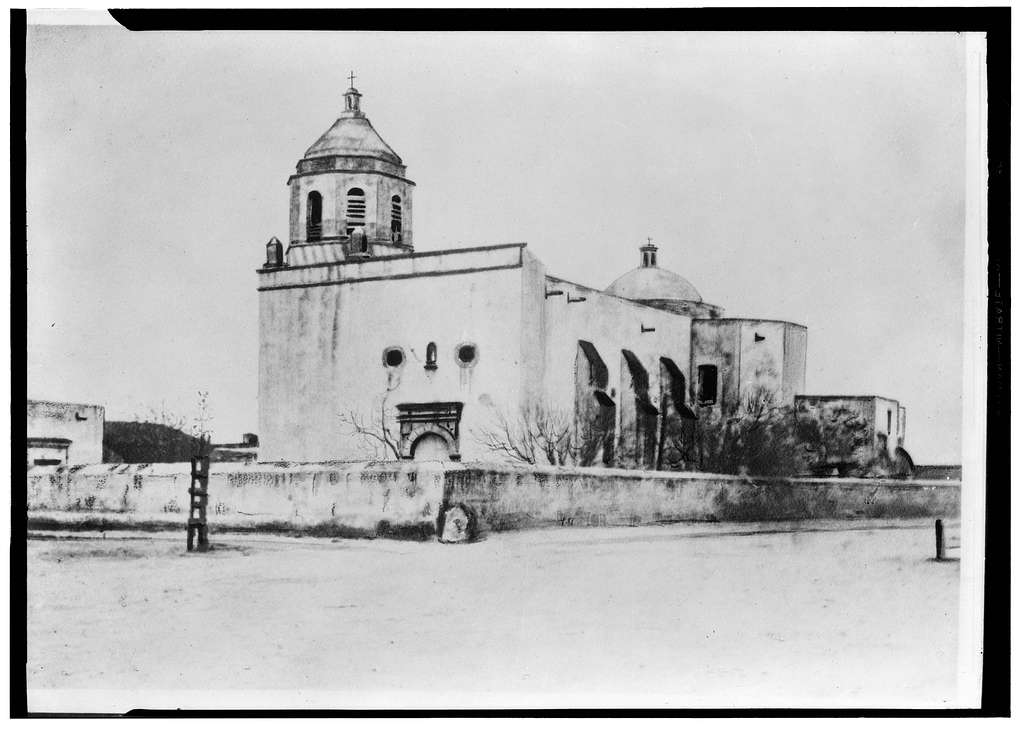
San Fernando Cathedral was founded on March 9, 1731, by a group of families from the Canary Islands. This church was planned as the center of life for San Antonio. Canary Islanders left their mark on the city bringing the spices and recipes to their new home. Courtesy of Library of Congress.
Chili con carne likely arrived in the United States when 16 families from the Canary Islands settled in San Fernando de Béxar, now part of San Antonio, in 1731. The Canary Islands are a Spanish archipelago situated off the northwest coast of Africa. The Canary Islanders were descendants of Berbers (ethnic groups indigenous to North Africa). The women of the Canary Islands made a stew of meat, garlic, chili peppers, wild onion, and cumin. The heavy use of cumin is reminiscent of Berber seasonings. The dish made on the islands is similar to chili con carne. It is worth noting that Indigenous Americans made stews that also resemble chili con carne out of wild game they caught.
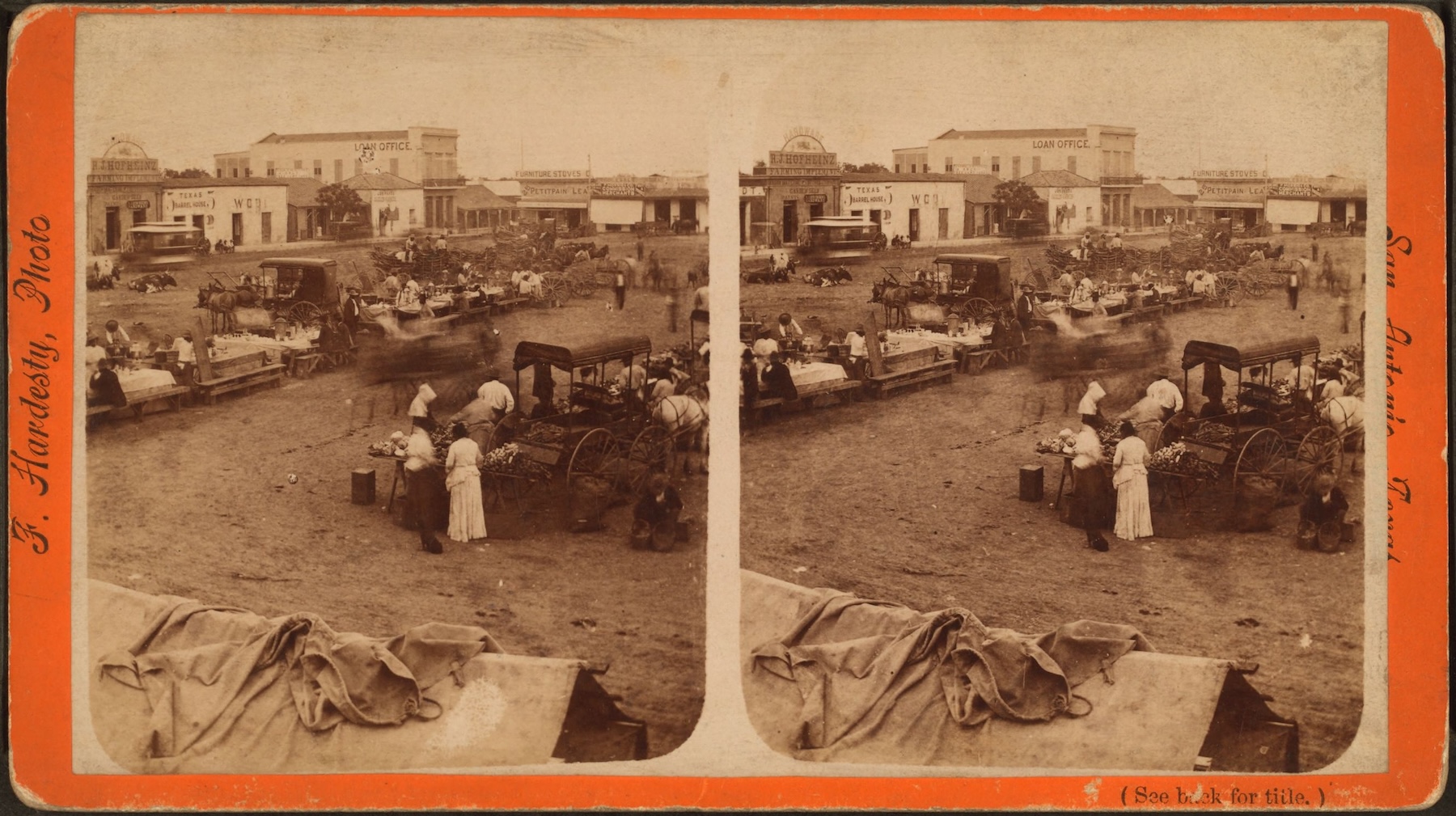
Chili con carne tables in San Antonio circa 1880. Courtesy of New York Public Library Digital Collections.
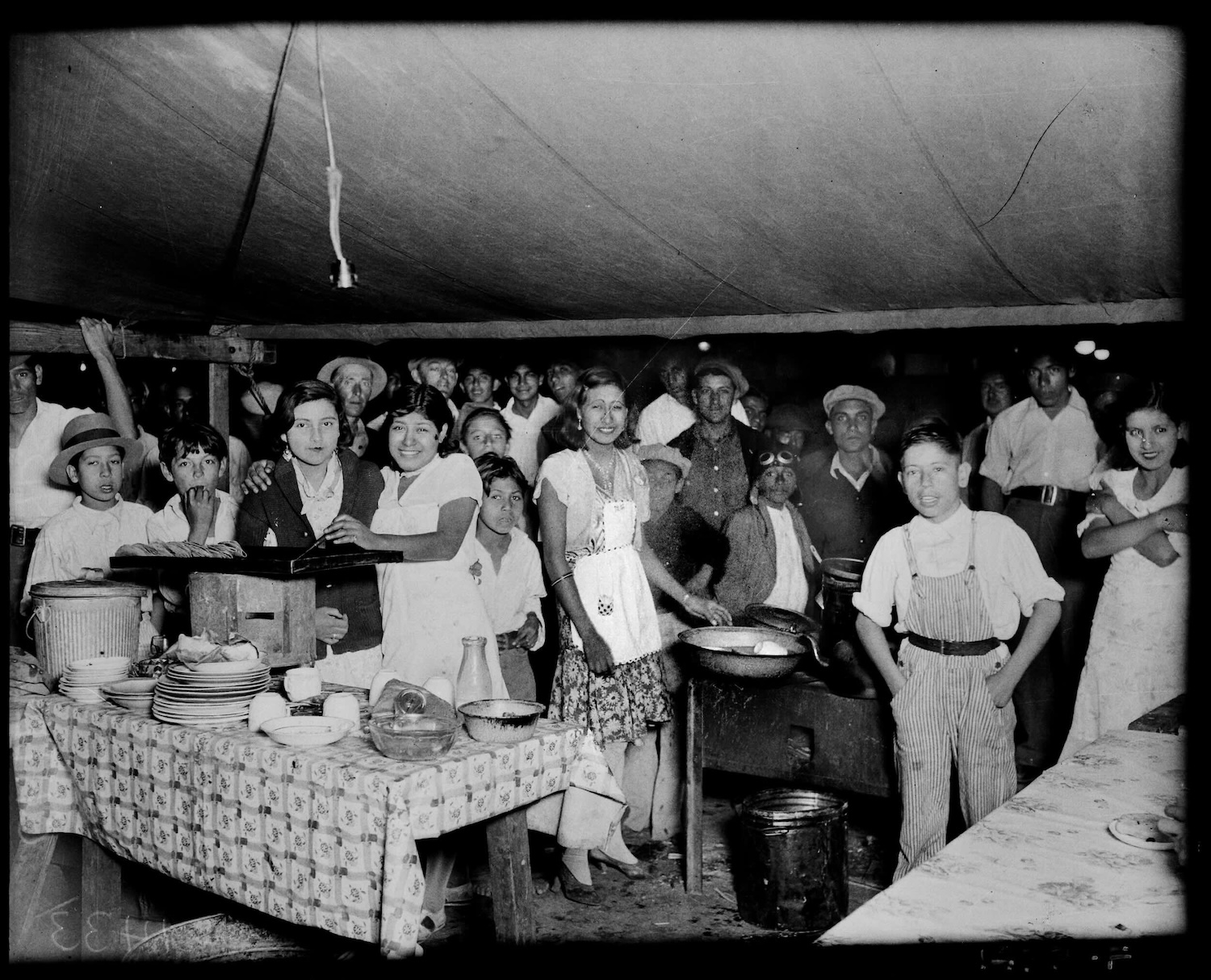
The popularization of chili con carne is attributed to the 1893 Chicago World’s Fair and the Chili Queens, who were active in the late 19th and early 20th centuries. The 1893 Chicago World’s Fair introduced chili con carne to people who had never seen or tasted the dish before, creating a whole new, larger group chili fans and cooks. The Chili Queens were Mexican businesswomen and entrepreneurs who served food from tables and stalls in San Antonio’s Military Plaza, Market Plaza, and other locations from the late 19th to the early 20th century. The queens had to haul their cookware to the Plaza each day and prepare food early in the mornings. They served chili con carne and a range of Mexican dishes. The Chili Queens became a popular attraction for locals and travelers, helping to popularize and spread chili con carne.
The Chili Queens fed many people who came through Haymarket Plaza in San Antonio, Texas. Courtesy of UTSA Special Collections.
By 1939, the number of chili stands and booths began to decline as health code regulations increased. The stands had been closed several times by the city, citing sanitation concerns, over the years. Still, they were reopened because the public was so outraged by their removal. The mayor of San Antonio at the time required the Chili Queens to use a central kitchen and display passing health cards. By 1940, the Chili Queens’ booths and stands had faded away. Chili con carne continued to spread across the country, thanks to the advent of canning.
Today, chili cook-offs take place across the nation, keeping the dish in the hearts, bowls, and palates of people. For example, the Carolinas Chili Championship takes place annually in Indian Land, South Carolina, offering attendees a great chili tasting competition. Chomp and Stomp in Atlanta’s Cabbagetown neighborhood also features a chili cook-off, music, and an artist market. Chili is featured on the menus of barbecue restaurants around the country, and can even be found on the menus of fast food chains like Culver’s and Wendy’s. Chili con carne is easy and quick to make at home, making it a perfect dish for those cold fall evenings.
A bowl of chili con carne. Courtesy of Wikimedia Commons. CC BY-SA 2.0.